Beyond Detection. Continuous Accuracy.
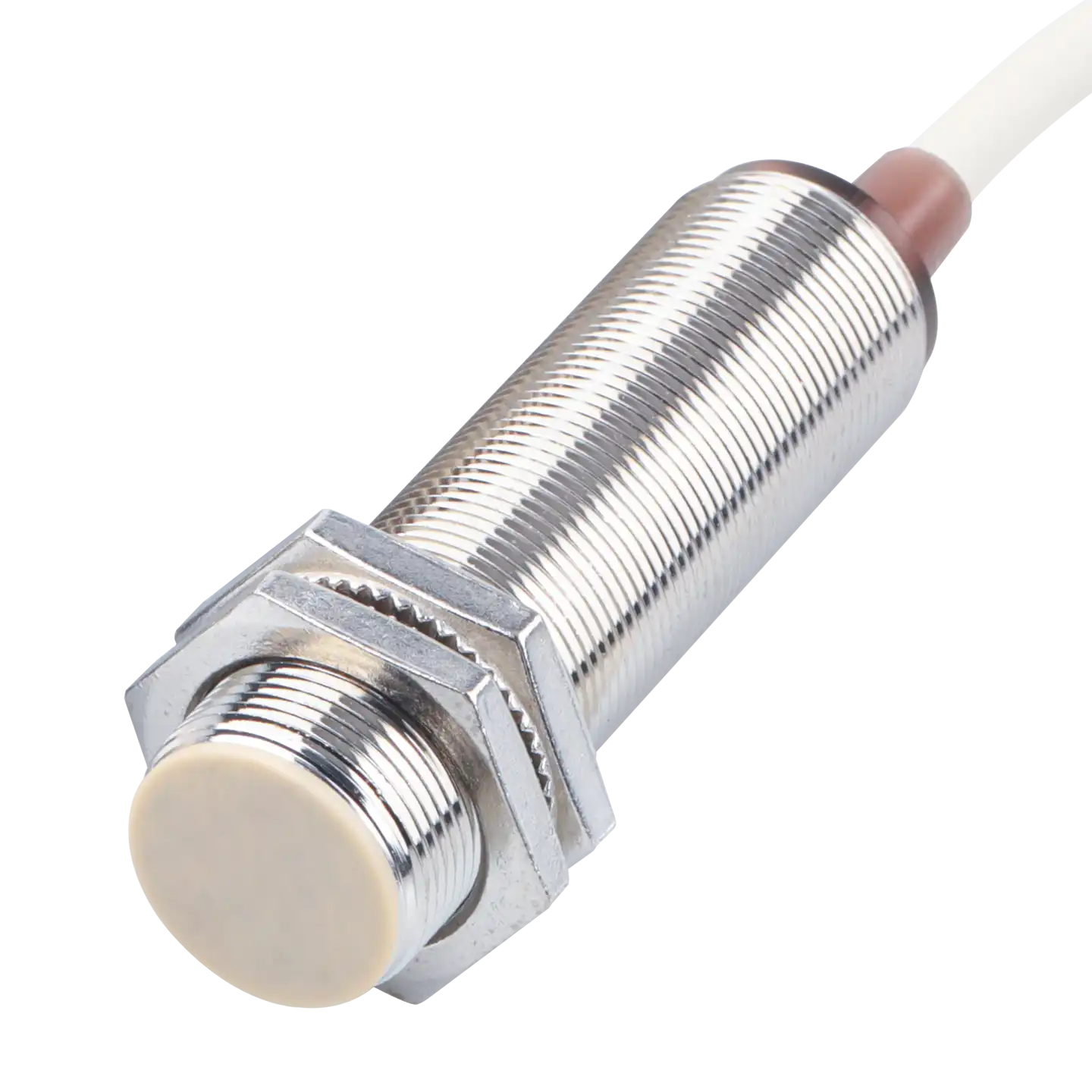
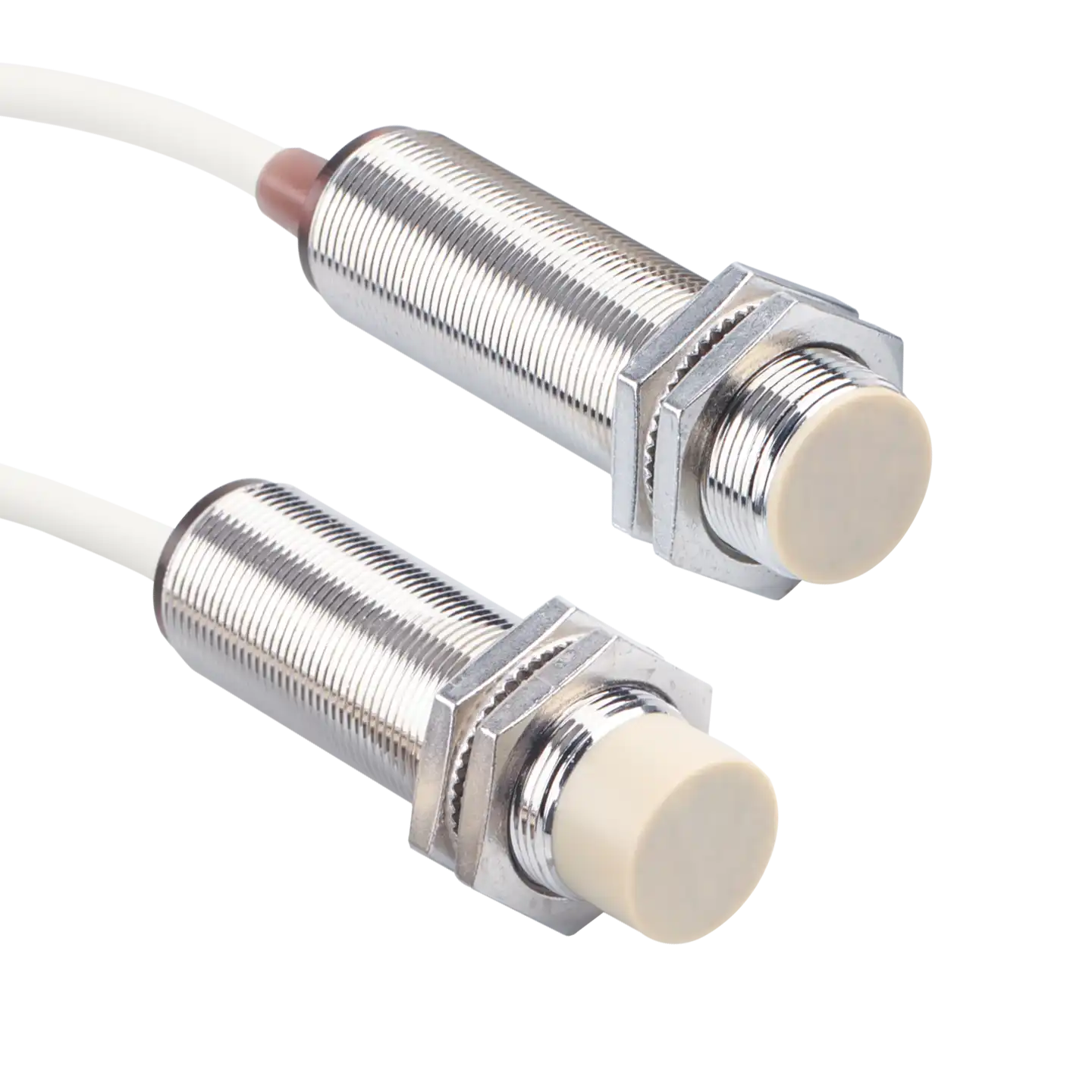
XSZ Analog Proximity Switches transform physical distance into precise 4-20mA or 0-10V signals. Engineered for real-time monitoring of thickness, tension, and micro-displacements in automated production lines.
Precision Through Linearity
XSZ analog sensors utilize high-frequency eddy current technology to detect metal targets, converting the displacement into a perfectly proportional electrical signal.
Detection Phase
The sensor generates a high-frequency electromagnetic field. As a metal target enters this field, eddy currents are induced, causing a change in amplitude.
ASIC Processing
Our internal high-speed ASIC chip processes this change and linearizes the output signal, ensuring an extremely low deviation rate.
Continuous Output
The result is a stable 4–20mA or 0–10V signal directly corresponding to the target's distance Sn.
Built for Metrology-Level Stability
Analog signals require extreme environmental stability. Our sensors are engineered to maintain micron-level accuracy even in fluctuating industrial conditions.
Micron Resolution
Achieve detection granularity down to 0.01mm. Perfect for detecting micro-deflections in mechanical arms or precision thickness gauging.
Thermal Stability
Integrated temperature compensation circuits prevent signal drift. Maintains consistent output across a wide range from -25°C to +70°C.
EMC Immunity
Industrial-grade shielding prevents interference from nearby motors or inverters. Ensures a "clean" 4-20mA loop for long-distance transmission.
Repeat Accuracy
Extreme consistency across millions of cycles. The sensor returns the exact same value for the same distance every single time.
Professional Product Series
A high-performance Analog Proximity Switch solution designed specifically for global industrial automation.
Optimized Signal Interfaces
XSZ analog sensors support the two most common industrial standards. Choose the output that best fits your transmission distance and control architecture.
The Professional Choice for Distance
Designed for robust performance in large-scale factories where sensors and PLCs are separated by long distances.
- Zero Signal Loss: Current remains constant regardless of cable length/resistance.
- EMI Immunity: High resistance to electromagnetic noise from heavy machinery.
- Wire-Break Detection: 4mA baseline allows for instant "dead wire" diagnosis.
Simple & Direct Integration
Ideal for local control cabinets and high-impedance data acquisition systems with shorter cable runs.
- Easy Monitoring: Can be directly measured with a standard multimeter for debugging.
- Lower Consumption: Consumes less power from the system supply.
- High Compatibility: Compatible with almost every standard ADC and microcontroller.
Precision in Every Dimension
From micro-meter thickness deviations to constant tension control, XSZ analog sensors provide the critical data stream needed for high-end automation.
Thickness Gauging
In metal sheet or foil production, two analog sensors can be used in a differential setup to monitor real-time thickness. Any deviation outside the microns-level tolerance triggers an immediate adjustment in the rolling mill.
Tension & Reel Control
Used in paper, cable, or textile winding machines to measure the reel diameter. The 4-20mA signal allows the motor controller to adjust torque constantly, maintaining perfect material tension as the roll grows.
Precision Positioning
Ideal for monitoring the stroke of hydraulic cylinders or the fine-tuning of robotic arm end-effectors. It provides absolute distance feedback instead of simple limit detection.
Quality Sorting
Automated sorting lines use analog sensors to check the height of components. Parts that are too tall or too short are identified by their specific voltage output and automatically diverted.
Technical Parameters
XSZ analog sensors are available in multiple housing sizes to match your sensing range requirements. All models feature integrated short-circuit and polarity protection.
| Core Specifications | M12 Series | M18 Series | M30 Series |
|---|---|---|---|
| Sensing Range (Sn) | 0 – 4 mm | 0 – 8 mm | 0 – 20 mm |
| Output Signal | 4–20 mA / 0–10 V (Model Dependent) | ||
| Resolution | ≤ 10 μm | ≤ 20 μm | ≤ 50 μm |
| Linearity Error | ≤ ±3% FS | ≤ ±3% FS | ≤ ±3% FS |
| Repeat Accuracy | ± 0.01 mm | ± 0.02 mm | ± 0.05 mm |
| Supply Voltage | 15 – 30 V DC | ||
| Max. Load (Current) | ≤ 500 Ω | ≤ 500 Ω | ≤ 500 Ω |
| Temperature Drift | ≤ ±5% (Full Scale, -25°C to +70°C) | ||
| Housing Material | Nickel-plated Brass / Stainless Steel (Optional) | ||
Installation Tip: For the most accurate linear output, the target size should be at least equal to the sensor's sensing face diameter. Non-ferrous metals (Aluminum/Copper) will require a Correction Factor adjustment in your PLC logic.
Precision In Motion
Watch our M12 analog sensor track a 0.01mm displacement in real-time. We demonstrate signal stability and linear response across the full measurement stroke.
Fe360 Standard Steel
10 Microns (0.01mm)
4-20mA (Live Loop)
Within 3% Error
Precision Manufacturing Excellence
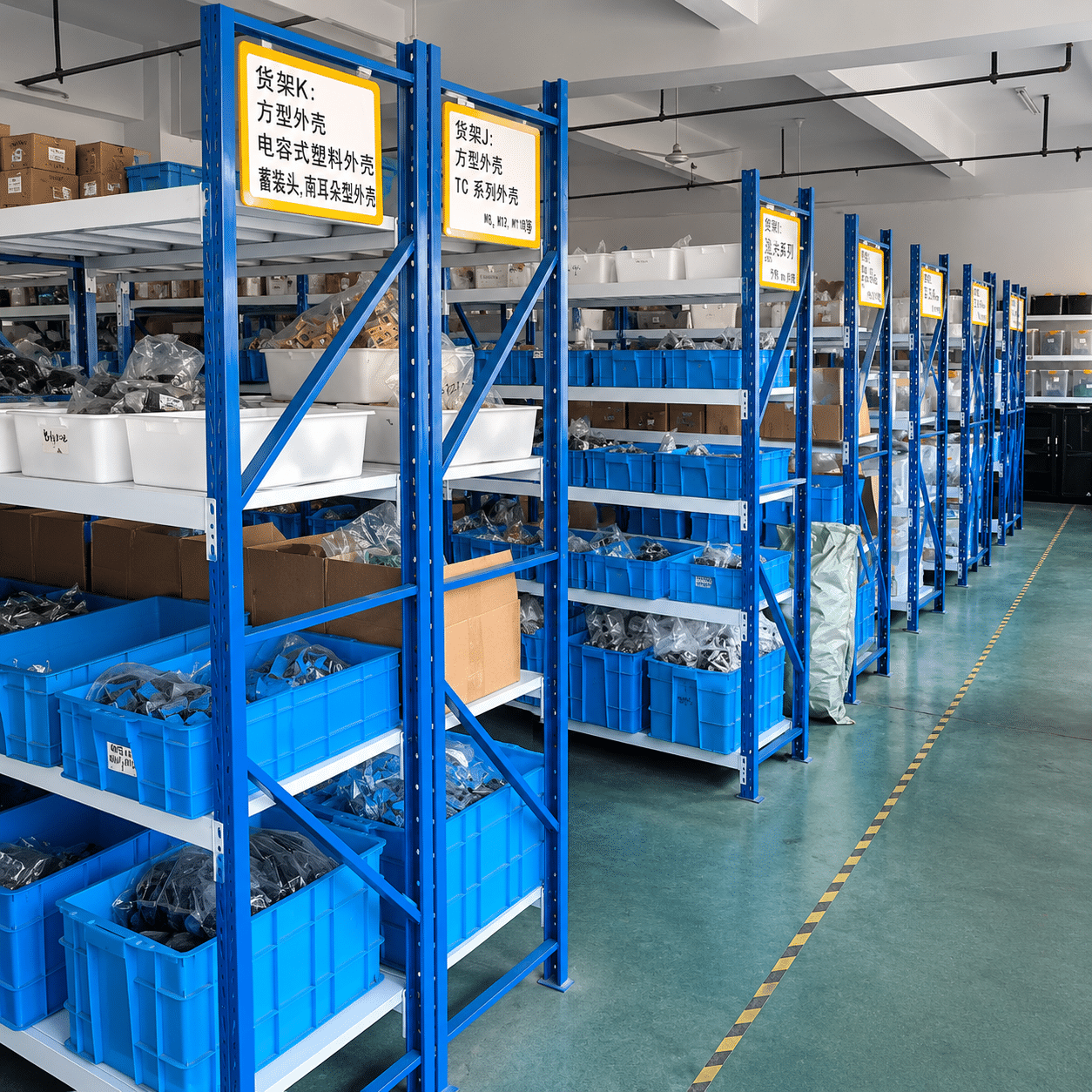
Every XSZ analog sensor undergoes a rigorous 100-point linearity calibration process. From clean-room ASIC assembly to automated EMI testing, we ensure metrology-grade stability for your critical measurements.


Interested in our automated calibration process? Request a Factory Tour Video →
Flexible Customization & Support
Every precision measurement task is unique. We provide comprehensive engineering support to ensure our analog sensors integrate seamlessly into your control loop.
Custom Signal Scaling
Need a 4-20mA output for a non-standard stroke (e.g., exactly 2.5mm - 7.2mm)? We can pre-calibrate the ASIC at the factory level to maximize your resolution within a specific window.
High-Flex & Shielded Cabling
For robotic arms or high-vibration CNC machines, we offer high-flex PUR cables and double-shielded twisted pairs to eliminate signal jitter and electromagnetic interference.
Integration Consultation
Our engineers provide wiring diagrams and PLC scaling block examples (Siemens S7, Rockwell, Mitsubishi) to help your team convert raw mA/V signals into real-world units (mm/μm) faster.
Target Material Calibration
Sensing Aluminum or Brass? We provide specific Correction Factors or can calibrate the sensor specifically for your non-ferrous target material to maintain high linearity.
Technical Challenge? We offer OEM branding, custom housing lengths, and expert advice on EMI shielding for analog circuits.
Speak with an Application EngineerWhat Our Global Partners Say
From precision thickness gauging to real-time tension control, XSZ analog proximity sensors are the trusted choice for engineers demanding metrology-grade stability.
"The Linearity Error of ≤ ±3% in XSZ analog sensors is remarkably consistent. We use them for micro-displacement monitoring on our CNC spindles, and the 4-20mA signal remains rock-solid without any jitter. Truly professional-grade hardware."
"We integrated XSZ analog switches for tension control in our paper mill. Even with heavy motors nearby, the integrated EMI shielding ensures a clean output. Their engineering team provided a Siemens PLC scaling block that saved us days of setup."
"The custom signal scaling service was vital for our non-standard stroke project. Sourcing directly from the XSZ factory allowed us to get pre-calibrated sensors that matched our exact range, saving us the cost of external signal converters."
Frequently Asked Questions
Expert insights into the installation, calibration, and signal optimization of XSZ analog displacement sensors.
When should I choose 4-20mA over 0-10V output?
+Choose 4-20mA if your sensor is located more than 15 meters from the PLC or if there is high electromagnetic interference (EMI) from motors. Current signals are immune to line resistance and voltage drops. Choose 0-10V for short-distance connections where simplicity and low power consumption are prioritized.
What does "±3% Linearity Error" actually mean?
+Linearity error represents the maximum deviation between the actual output signal and the theoretical ideal straight line. For a sensor with an 8mm range and 3% error, the maximum measurement deviation would be 0.24mm. XSZ sensors are factory-calibrated to keep this error at the absolute minimum across the entire stroke.
Does the target material affect the analog output?
+Yes. Analog sensors are calibrated for standard steel (Fe360). Non-ferrous metals like Aluminum or Copper will reduce the maximum sensing distance (Correction Factor). For these materials, the slope of the output curve will change, and you may need to adjust the scaling factors in your PLC logic.
How can I reduce signal jitter in a high-noise environment?
+To ensure a "clean" signal: 1. Use shielded twisted-pair cables and ground the shield at the PLC side only. 2. Route sensor cables away from high-voltage power lines. 3. Utilize the built-in averaging filter or software smoothing blocks within your PLC program.
What is the difference between Resolution and Repeat Accuracy?
+Resolution (e.g., 10μm) is the smallest change in distance that the sensor can detect and output. Repeat Accuracy (±0.01mm) is the sensor's ability to provide the exact same signal when the target returns to the same position multiple times. Both are critical for high-precision metrology.
Still have technical integration questions?
Our application engineers can provide custom wiring diagrams and PLC scaling code snippets.