Industrial liquid detection guide
What Sensor Detects Liquid? Choose by Level, Leak, Flow, or Presence
There is no single “liquid sensor.” A tank high-level switch, continuous level transmitter, floor leak cable, pipe flow meter, and bottle presence sensor answer different questions and respond to different physical properties.
Choose a switching principle compatible with conductivity, density, buildup, and wetted materials.
Compare radar, ultrasonic, hydrostatic, guided-wave, and capacitance by process conditions.
Capacitive sensing can detect through a compatible non-metal wall when states remain separable.
Use a spot, tray, cable, or area leak system matched to the liquid and coverage zone.
Flow rate and liquid identity require flow or analytical instrumentation, not a level switch.
The useful answer
A sensor detects a property of the liquid or process, not the word “liquid.”
A conductive level controller detects whether a liquid closes an electrical path. A capacitive sensor detects a change in the electric field. A float responds to buoyancy. Radar and ultrasonic instruments evaluate reflected waves. Hydrostatic instruments infer level from pressure. Leak cables detect liquid along a protected route.
That is why the same water tank can use several sensors at once: a continuous level transmitter for inventory, an independent high-level switch for overflow control, a low-level switch for pump protection, and a leak cable around the vessel base. Each device has a different purpose and acceptance test.

Six separate search intents
“Detect liquid” can mean six different automation jobs.
Use this task map to prevent a point switch, level transmitter, leak sensor, and flow meter from being compared as though they were substitutes.
Point level
Switch when liquid reaches a high, low, full, empty, overflow, or pump-protection point.
Output: discrete ON/OFF or monitored stateContinuous level
Measure level or distance across a working span for display, control, dosing, or inventory.
Output: analog value, fieldbus, or IO-LinkLeak detection
Detect liquid outside the process around equipment, floors, pipes, cabinets, or protected routes.
Output: spot, zone, or location alarmLiquid present?
Confirm liquid through a compatible wall or in a transparent tube without measuring total tank level.
Output: discrete presence signalFlow detection
Confirm that liquid is moving or measure volume or mass flow through a pipe.
Use: flow switch or flow meterIdentity or quality
Determine concentration, conductivity, turbidity, refractive index, pH, composition, or contamination.
Use: analytical measurement instrumentApplication selector
Which sensor should detect your liquid?
Select the result the machine needs. Each recommendation is a starting principle followed by the application evidence that should be verified.
What must the system report?
Recommended starting point
Compare float, capacitive, conductive, vibronic, optical-tip, or impedance-based point switches
Choose by conductivity, density, viscosity, coating, foam, hygienic requirements, process connection, and whether the sensor may contact the liquid.
Point-level detection
Five point-switch principles read five different liquid properties.
Point level asks whether the liquid has crossed a fixed location. It does not require a full tank-level value, but it still demands compatibility with the liquid and failure mode.
Float switch
Uses buoyancy and mechanical or magnetic movement. Check density, viscosity, orientation, turbulence, minimum movement space, coating, and whether moving parts can stick or wear.
Conductive electrodes
The liquid closes an electrical path between electrodes. Use only when the liquid resistance falls inside the controller specification. Oil and many low-conductivity liquids need another method.
Capacitive switch
Responds to a capacitance change. It can be wetted or mounted outside a compatible non-metal vessel. Verify dielectric contrast, wall, buildup, moisture, grounding, nearby metal, and adjustment margin.
Vibronic or impedance
Detects how the medium changes vibration or electrical impedance at the sensing element. Model suitability can depend on density, viscosity, foam, buildup, and hygienic or process requirements.
Optical prism tip
A wetted optical tip detects the refractive change between air and liquid. It is compact, but coating, bubbles, droplets, color, and residue can affect the switching result.
Continuous level measurement
Choose the measurement principle around the vessel, liquid, and required uncertainty.
Continuous systems measure level or distance across a working span. Contact versus non-contact is useful, but it is not enough to select a technology.
| Method | What it measures | Contact with liquid? | Useful starting conditions | Main checks |
|---|---|---|---|---|
| Free-space radar | Time or frequency behavior of microwave energy reflected from the surface. | Normally no liquid contact, though the antenna is exposed to the process space. | Top-mounted continuous measurement where vapor, temperature, pressure, foam, or internals must be evaluated. | Dielectric behavior, antenna/nozzle, beam path, buildup, false echoes, foam, pressure, temperature, and hazardous-area approval. |
| Ultrasonic | Travel time of sound reflected from the liquid surface. | No liquid contact in a top-mounted arrangement. | Open or vented vessels with a clear acoustic path and suitable surface return. | Blanking zone, vapor composition, temperature, foam, turbulence, condensation, nozzle, obstructions, and multiple echoes. |
| Hydrostatic pressure | Pressure generated by the liquid column, converted to level using density and vessel conditions. | Yes, through a pressure connection or submersible transmitter. | Stable-density liquids where bottom pressure provides a practical level measurement. | Density variation, closed-vessel gas pressure, mounting height, temperature, diaphragm material, clogging, and venting. |
| Guided-wave radar | Microwave pulse travel along a probe and reflection from the medium interface. | Yes; the probe extends into the vessel. | Narrow vessels or process conditions where a guided signal path is useful. | Probe length, dielectric behavior, foam, coating, bridging, internals, interface measurement, pressure, and cleanability. |
| Capacitance probe | Capacitance change along a probe as the covered length changes. | Usually yes for continuous probe systems; external designs also exist for certain vessels. | Liquids with a stable enough dielectric relationship and compatible probe arrangement. | Dielectric change, conductive/non-conductive mode, coating, tank grounding, probe geometry, calibration, and temperature. |

Contact versus non-contact
Choose by the failure mode, not by the assumption that one family is always better.
Non-contact radar and ultrasonic instruments avoid a probe extending into the liquid, which can reduce some corrosion, hygiene, or coating concerns. They still depend on the process space, mounting nozzle, beam path, condensation, false echoes, and surface condition.
Contact technologies can provide a direct and compact measurement, but wetted materials, seals, coating, moving parts, cleanability, and process pressure become part of the specification. Guided-wave radar and hydrostatic pressure are contact methods even though they are sometimes grouped casually with radar or electronic measurement.
Liquid property matrix
Water, oil, acid, foam, and slurry do not have one universal “best sensor.”
Use the medium name only as a starting point. Concentration, conductivity, density, dielectric behavior, viscosity, solids, vapor, coating, temperature, and pressure can change the recommendation.
| Liquid condition | Useful candidates | Methods to question first | Evidence to provide |
|---|---|---|---|
| Conductive water or wastewater | Conductive point control, capacitive, float, vibronic, hydrostatic, ultrasonic, radar, or guided-wave depending on the task. | None by name alone; fouling, solids, conductivity range, foam, and vessel geometry decide. | Conductivity or resistance, solids, coating, temperature, tank dimensions, turbulence, and required output. |
| Oil or low-conductivity liquid | Capacitive, float, optical tip, impedance-based, hydrostatic, guided-wave, or radar subject to the model. | Standard conductive electrodes unless the actual resistance fits a dedicated high-sensitivity system. | Oil grade, dielectric behavior, density, viscosity, additives, coating, temperature, and wall material. |
| Corrosive acid or alkali | Compatible non-contact radar/ultrasonic or a contact instrument with verified wetted materials and seals. | Any unverified metal electrode, float, diaphragm, seal, probe, cable jacket, or antenna material. | Chemical name, concentration, temperature, pressure, vapor, cleaning chemicals, and exposure duration. |
| Foaming liquid | Radar, guided-wave radar, hydrostatic, or point-level methods validated against the actual foam. | Open ultrasonic or any method claimed to “ignore foam” without application evidence. | Foam depth, density, persistence, agitation, vapor, desired surface/interface, and process cycle. |
| Viscous, sticky, or slurry | Non-contact radar, hydrostatic with suitable diaphragm, or residue-resistant point methods depending on composition. | Small gaps, moving floats, exposed electrodes, forks, or probes prone to bridging or coating. | Viscosity range, particle size, settling, abrasion, buildup, cleaning, density, and temperature. |
| Food, beverage, or pharmaceutical | Hygienic point or continuous instruments with compatible process connection and documented cleanability. | General-purpose devices without suitable materials, surface finish, approvals, or cleaning ratings. | Product, hygienic standard, CIP/SIP cycle, temperature, pressure, connection, and documentation requirement. |

Through-wall and packaging detection
External capacitive sensing works only when the wall and liquid states remain distinguishable.
A capacitive proximity sensor can be mounted outside a non-metal tank, sight glass, tube, or bottle and respond as liquid reaches the sensing zone. This avoids a process penetration, but the sensor sees the complete electric-field environment: container wall, air gap, liquid, mounting bracket, nearby metal, moisture, label, residue, and the operator's adjustment.
For transparent tubing or containers, a photoelectric or fiber optic arrangement may detect the optical change between empty and filled states. This is not the same as detecting the bottle itself. Refraction, bubbles, color, wall curvature, labels, foam, and liquid film can all change the result.
Leak detection
A leak sensor watches the protected area, not the level inside the vessel.
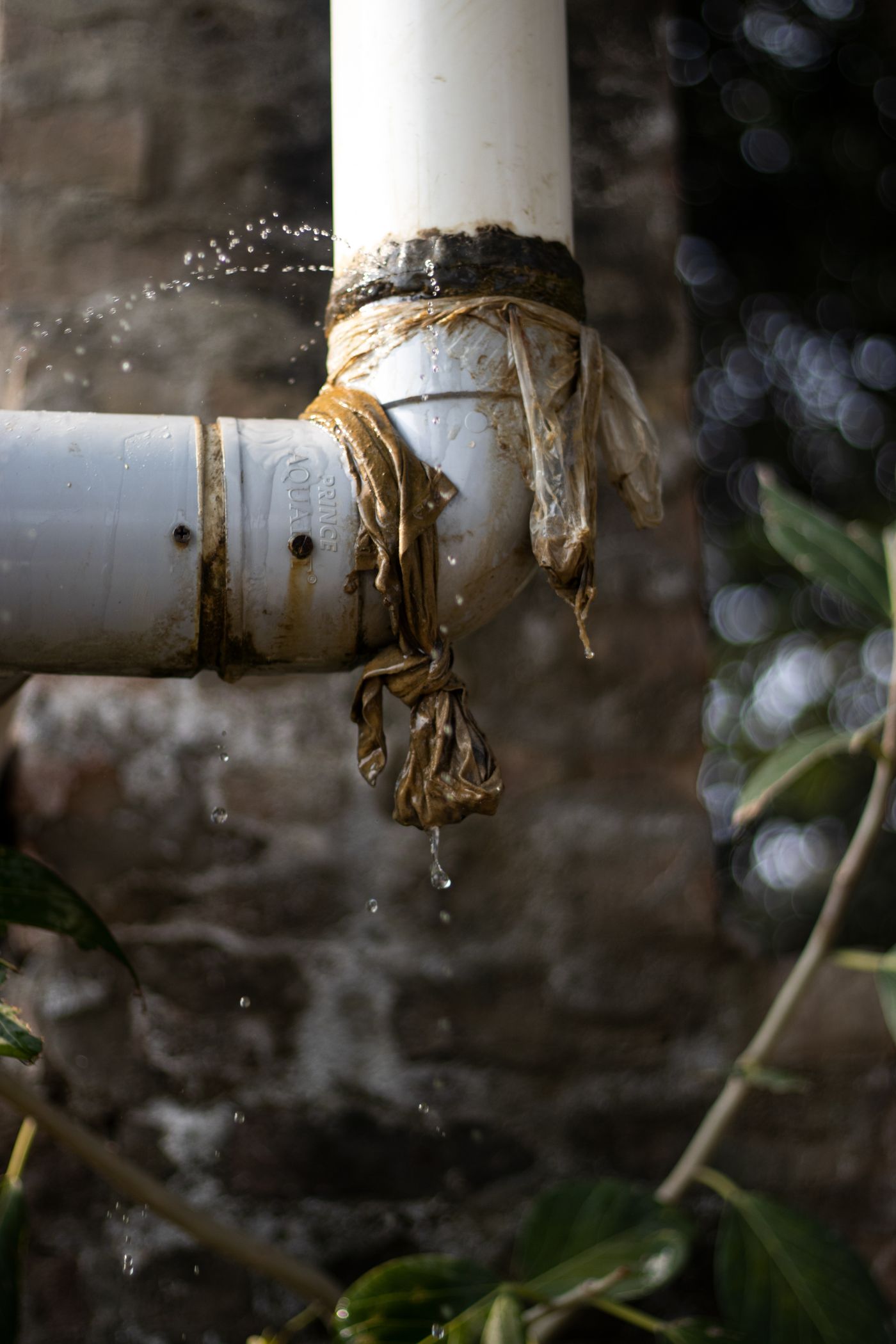
A spot sensor protects one low point such as a drip tray, cabinet, pump base, or pipe connection. A sensing cable covers a route around tanks, under raised floors, or beside equipment. A tray or area sensor covers a larger defined surface. The controller may report only an alarm zone or may estimate the leak location along a cable.
Conductive water-leak cables work when water or another conductive liquid changes electrical behavior between sensing elements. Hydrocarbon, solvent, refrigerant, and chemical leaks may require a different cable material or detection principle. A “water leak cable” should not be assumed to detect oil.
Know when level sensing is the wrong category
Flow, pressure, and liquid quality require their own instruments.
A sensor can confirm liquid is present without proving it is moving, has the correct concentration, or is safe to use.
| Required answer | Correct instrument family | Why a level sensor is insufficient | Selection information |
|---|---|---|---|
| Is liquid flowing? | Flow switch or flow meter: thermal, magnetic, ultrasonic, Coriolis, vortex, mechanical, or another compatible principle. | A full pipe or wet probe can remain present during zero flow. | Pipe size, liquid conductivity/viscosity, flow range, pressure, temperature, accuracy, pressure drop, and output. |
| What is the line pressure? | Pressure switch or transmitter with compatible diaphragm and process connection. | Tank level and pipe pressure are related only under defined geometry, density, and process conditions. | Pressure range, static/dynamic behavior, overpressure, temperature, media compatibility, and connection. |
| Is it the correct liquid? | Conductivity, refractive index, density, spectroscopy, or another analytical method. | Capacitive or optical presence sensing may distinguish two states but does not prove composition universally. | Materials to separate, concentration range, additives, temperature, bubbles, calibration, and required confidence. |
| Is the liquid clean? | Turbidity, particle, color, conductivity, pH, or application-specific analytical measurement. | A level switch can remain ON while the product becomes contaminated. | Contaminant, detection threshold, optical path, sample handling, cleaning, calibration, and data output. |
Conditions that change the result
Nine application details can overturn the first sensor choice.
Record these before requesting a model or designing the mounting connection.
Point, continuous, leak, flow, quality
Define the exact process question, output, control action, and failure response.
Conductivity and dielectric behavior
These determine whether conductive or capacitive methods can separate the required states.
Density, viscosity, solids
Buoyancy, hydrostatic conversion, coating, settling, abrasion, and flow behavior depend on them.
Corrosion and material compatibility
Give the exact chemical, concentration, temperature, seals, cleaning agents, and exposure time.
Foam, turbulence, vapor, condensation
These alter acoustic, microwave, optical, float, and point-switch behavior in different ways.
Geometry and internals
Tank height, diameter, nozzle, agitator, ladder, coil, cone, fill stream, and outlet affect installation.
Temperature and pressure
Confirm normal, startup, cleaning, fault, vacuum, and overpressure conditions for the exact sensor.
Coating, scale, residue, bubbles
Define how the sensing element or signal path changes between cleaning intervals.
Output, power, diagnostics
Match switching logic, analog range, PLC input, fieldbus, cable, connector, alarm supervision, and fault state.
Selection request checklist
Send these eight facts for a useful liquid-sensor recommendation.
A clear application brief lets the supplier reject unsuitable principles before sample testing and prevents a generic “water sensor” from being applied to oil, chemicals, foam, or a continuous measurement task.
Required result
High/low point, continuous level, leak, tube presence, flow, pressure, identity, or quality.
Exact liquid
Name, concentration, additives, conductivity, density, viscosity, solids, foam, and coating behavior.
Process limits
Normal and extreme temperature, pressure, vacuum, cleaning, sterilization, and fault conditions.
Tank or pipe geometry
Dimensions, wall material, nozzle, connection, access, internals, fill stream, outlet, and mounting drawing.
Measurement requirement
Switching point or span, tolerance, response, repeatability, alarm delay, update rate, and acceptable dead band.
Environment
Washdown, humidity, ambient temperature, vibration, electrical noise, hazardous area, and ingress protection.
Electrical interface
Supply, NPN/PNP, NO/NC, analog input, IO-Link or fieldbus, cable, connector, and fault monitoring.
Compliance and quantity
Hygienic, food-contact, marine, hazardous-area, safety, documentation, OEM, sample, and repeat-order needs.
Use minimum and maximum concentration, temperature, density, conductivity, viscosity, and contamination.
Include real wall, nozzle, bracket, gap, internals, grounding, turbulence, foam, and fill stream.
Test coating, dry-run, overfill, empty tank, bubbles, loss of echo, cable fault, power cycle, and cleaning.
Log false trips, missed events, signal margin, measurement spread, fault response, maintenance, and retuning.
Troubleshooting by symptom
Use the failure pattern to decide whether to clean, retune, remount, or change principle.
Do not mask an application mismatch by increasing sensitivity or damping until the signal looks quiet.
| Observed problem | Likely cause | First checks | When to change approach |
|---|---|---|---|
| Capacitive sensor stays ON | Residue, wet outer wall, nearby metal, grounding change, excessive sensitivity, cable noise, or wall variation. | Clean and dry the installation, compare empty/full signal, inspect gap and bracket, review grounding, and repeat the specified teach procedure. | Use another mounting or principle when empty and full states do not maintain sufficient separation. |
| Conductive probe never switches | Liquid resistance outside the controller range, coated electrodes, broken wiring, wrong common electrode, or incompatible controller. | Follow the manufacturer's resistance test, inspect electrodes and wiring, confirm liquid conductivity, and use the specified controller/electrode set. | Use capacitive, float, optical, vibronic, or another method for oil or liquids outside the resistance range. |
| Float chatters or sticks | Turbulence, fill stream, sludge, scale, viscosity, insufficient movement, wrong orientation, or damaged stem. | Inspect movement, density and orientation; move away from the inlet; add a suitable stilling arrangement; clean and retest. | Use a solid-state point switch when moving parts cannot remain free across the maintenance interval. |
| Ultrasonic level jumps | Foam, vapor, condensation, temperature change, turbulence, nozzle echo, obstruction, or operating inside the blanking zone. | Review echo data, mounting, maximum level, beam path, temperature compensation, false-echo mapping, and process cycle. | Compare radar, guided-wave, or hydrostatic measurement when the acoustic path cannot remain stable. |
| Radar reads an internal fitting | Poor nozzle, beam aimed at ladder/coil/agitator, weak surface return, buildup, false-echo setup, or unsuitable antenna. | Review the vessel drawing, echo curve, antenna/nozzle, mounting angle, dead zone, false-echo suppression, and dielectric behavior. | Change mounting, antenna, frequency, guided-wave arrangement, or measurement principle after application review. |
| Leak cable alarms after cleanup | Residual liquid, conductive contamination, trapped moisture, damaged cable, dirty connectors, or incorrect end termination. | Follow the cable cleaning and drying procedure, inspect connections, test cable condition, and isolate sections if supported. | Replace contaminated or damaged cable, or select a cable chemistry intended for the actual leaked liquid. |
XSZ application support
Send the liquid, container wall, sensing point, and PLC requirement before fixing the sensor model.
XSZ can compare capacitive proximity, photoelectric, fiber optic, and related industrial sensing options for point presence, through-wall level, tube, bottle, and OEM machine applications. Include the real liquid, empty/full samples, wall material and thickness, sensor gap, environment, voltage, output, cable or connector, and required quantity.
Continue the selection
Related XSZ sensor pages
Use these pages for the industrial sensor families and integration decisions closest to liquid presence and level applications.
Frequently asked questions
Questions about sensors that detect liquid
What is the best sensor for detecting water level?
There is no universal best water-level sensor. For a fixed high or low point, candidates include conductive electrodes, float, capacitive, vibronic, optical-tip, or impedance-based switches. For continuous level, compare radar, ultrasonic, hydrostatic pressure, guided-wave radar, or capacitance. Water conductivity, tank geometry, foam, solids, coating, temperature, pressure, required accuracy, and maintenance decide the final method.
Can a capacitive sensor detect liquid through plastic or glass?
Yes, a capacitive sensor can often detect liquid through a compatible non-metal wall. The result depends on wall material and thickness, sensor gap, liquid dielectric behavior, container shape, mounting, nearby metal, grounding, labels, condensation, residue, and sensitivity. Test the actual empty and full states across temperature and production tolerances before approving the model.
Can one sensor detect both water and oil?
Some capacitive, float, optical-tip, radar, ultrasonic, hydrostatic, or guided-wave instruments can be configured for both water and oil, but the same setup may not provide equal margin. Conductive electrodes generally require the liquid resistance to fall within the controller specification, so ordinary oil is often unsuitable. Validate each liquid, temperature, density, dielectric behavior, and coating state.
How can liquid level be measured without touching the liquid?
Free-space radar and ultrasonic instruments can measure from above without a probe touching the liquid. External capacitive systems can also detect or measure through certain non-metal vessel walls. “Non-contact” does not eliminate application checks: nozzle, beam path, foam, vapor, condensation, tank internals, wall construction, pressure, temperature, and chemical exposure around the sensor still matter.
What sensor detects a water leak?
Use a spot leak sensor for one collection point, a sensing cable for a protected route, or an area/tray sensor for a defined surface. Conductive cables detect water and other compatible conductive liquids, while oil, fuel, solvent, refrigerant, or chemical leaks may need a different cable or technology. Place sensing where containment and gravity bring the leak.
Which level sensor works with foam?
Foam performance depends on the foam and the exact instrument. Radar, guided-wave radar, hydrostatic pressure, vibronic, impedance-based, capacitive, and other methods may be candidates. Foam can attenuate or shift ultrasonic and radar signals, coat contact sensors, or represent a different interface from the liquid surface. Test foam depth, density, persistence, agitation, vapor, and the required measurement surface.
Does a liquid level sensor prove that liquid is flowing?
No. A level or presence sensor can stay active while liquid in the pipe is stationary. Use a flow switch when the controller needs a discrete flow/no-flow result, or a flow meter when it needs volume or mass flow. Select the flow technology by pipe size, liquid properties, flow range, pressure, temperature, allowed pressure drop, accuracy, and output.
How should I test a liquid sensor before ordering in volume?
Test the actual liquid at minimum and maximum concentration, conductivity, density, viscosity, temperature, and contamination. Recreate the real vessel wall, nozzle, bracket, gap, turbulence, foam, vapor, grounding, and nearby metal. Challenge empty, full, overfill, dry-run, coating, cleaning, power-cycle, and cable-fault states, then record misses, false trips, signal margin, measurement spread, diagnostics, and maintenance.
Evidence and media
References and image credits
Technical references
- Endress+Hauser Level Measurement Overview — continuous and point-level technologies, contact and non-contact methods, and selection factors.
- ifm Level Sensors Overview — capacitive, radar, ultrasonic, hydrostatic, guided-wave, and point-level applications.
- OMRON Level Switches Guide — conductive level-controller principle and non-conductive-liquid limitation.
- OMRON Pure-Water Level FAQ — selection by measured interelectrode resistance and controller specification.
- ifm Capacitive Sensors — electric-field detection for objects and liquids, including level applications.
- ifm Guided-Wave Radar Technology — probe-guided time-of-flight measurement and foam or buildup considerations.
- RLE Water Leak Detection Cable Datasheet — conductive-fluid leak detection along a sensing cable route.
Image credits
- Industrial processing tanks: Mark Stebnicki / Pexels.
- Industrial storage tanks: Brett Sayles / Pexels.
- Automated liquid filling line: Wzm Pictures / Pexels.
- Leaking pipe: Swastik Arora / Pexels.
- Industrial proximity sensor image: XSZ Sensor.
Technical examples describe sensing principles and model-dependent capabilities, not universal performance. Final selection should follow the exact datasheet, compatibility review, process risk assessment, and test with representative liquid and vessel conditions.