Through-beam Photoelectric Sensors for Long-distance Detection.
XSZ through-beam photoelectric sensors use a separate transmitter and receiver to detect objects that interrupt the light beam. They are a strong choice for long-distance detection, fast counting, conveyor lines and applications that need reliable signal margin.
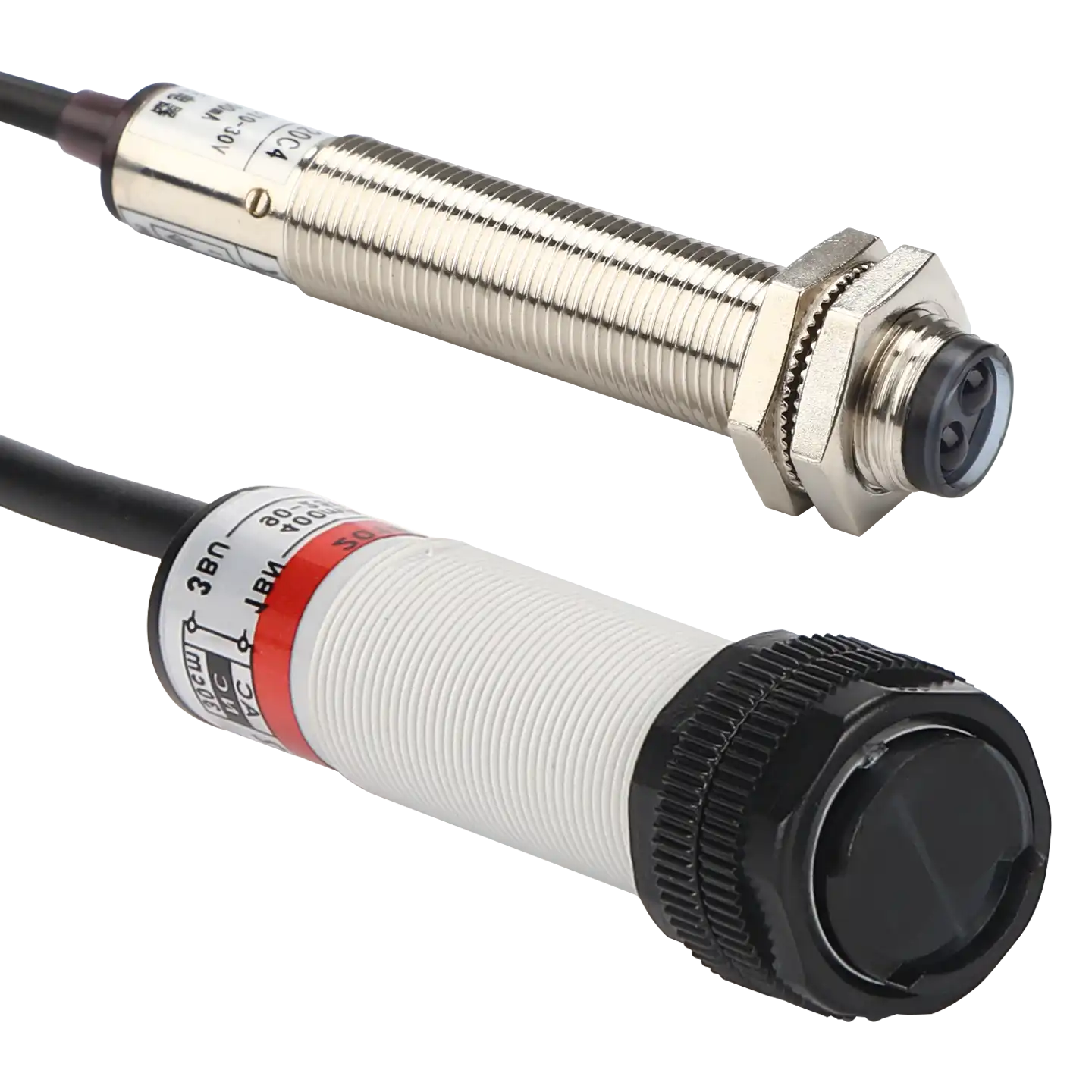
- Separate emitter and receiver for strong beam stability
- Suitable for long distance, fast objects and harsh line conditions
- NPN / PNP, NO / NC, cable and connector support
Use through-beam sensing when stability matters more than simple installation
Because the transmitter and receiver face each other, through-beam sensors usually provide stronger detection margin than diffuse or retro-reflective sensors. They are useful when the target is fast, small, dark, low-reflective or passing through a dusty line.
Strong beam signal
The receiver gets light directly from the transmitter, so detection is based on beam interruption rather than target reflection.
Better for fast lines
Through-beam sensors are widely used for counting, presence detection, reject stations and conveyor object verification.
Independent of target color
Dark, shiny or mixed-color targets are often easier to detect because the sensor checks whether the beam is blocked.
For conveyors, packaging lines and long-distance object detection
Through-beam photoelectric sensors are selected when the machine has two-sided mounting space and needs stable beam interruption detection.
- Carton, bottle, bag and product counting on conveyor lines
- Long-distance object presence detection across machine frames
- Fast-moving target detection and reject station verification
- Dark, shiny or low-reflective objects that are difficult for diffuse sensing
- Packaging, sorting, logistics, assembly and automated production lines
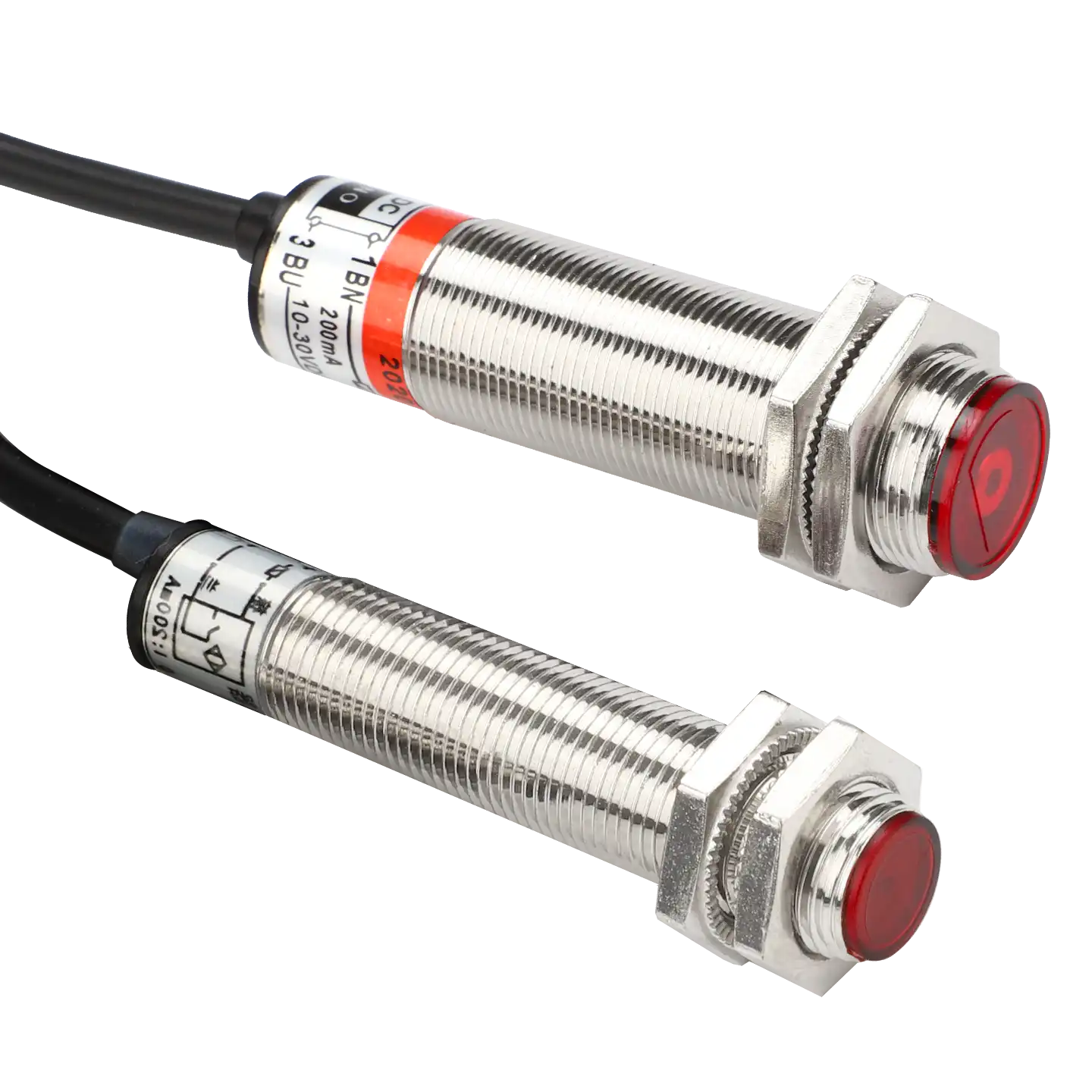
Choose by beam distance, target size and alignment space
Through-beam sensors need a clear optical path between transmitter and receiver. Before ordering, confirm the beam distance, target size, mounting tolerance and whether the machine allows alignment from both sides.
| Selection Point | Customer Problem | Recommended Check | Information to Provide |
|---|---|---|---|
| Beam distance | Signal becomes weak across a long machine opening | Confirm the distance between transmitter and receiver | Required sensing width, minimum and maximum distance |
| Target size | Small targets may not block enough light | Compare target size with beam diameter and mounting position | Target material, size, shape and movement direction |
| Alignment access | Emitter and receiver are hard to line up after installation | Check bracket design, adjustment space and visual access | Installation photo, bracket drawing and mounting height |
| Line speed | Fast objects create very short signal duration | Match response time to conveyor speed and object spacing | Line speed, object spacing and PLC input timing |
| Environment | Dust, water, vibration or oil mist reduces beam strength | Confirm IP level, cleaning condition and beam margin | Environment photo, dust/water/oil exposure and cleaning cycle |
Through-beam vs retro-reflective: choose stability or simpler wiring
Both are used for object interruption detection. Through-beam normally gives stronger signal margin, while retro-reflective can simplify wiring because only one side has the sensor cable.
Through-beam Sensor
- Transmitter and receiver are mounted on opposite sides
- Strong signal margin for longer distance and difficult targets
- Better for dark, shiny, mixed-color or fast-moving objects
- Requires two-sided mounting, wiring and alignment
Retro-reflective Sensor
- Sensor and reflector are mounted on opposite sides
- Wiring is usually needed only on the sensor side
- Good for many conveyor and packaging applications
- Reflective or transparent targets may need special selection
Prevent weak beam, poor alignment and short signal problems
Through-beam sensors are stable when installed correctly, but missed detection can still happen if the beam is misaligned, the target is too small, or the object passes too quickly.
Only checking rated distance
The rated distance does not show how much margin remains after dust, vibration, lens contamination and bracket tolerance.
Confirm beam margin and target size
Share the real beam width, target size and machine speed so XSZ can recommend a model with practical signal margin.
More reliable line control
Correct selection helps reduce missed counts, false clear signals, unstable output and repeated commissioning work.
Through-beam sensor options for OEM machines and replacement projects
XSZ supports model matching by beam distance, housing style, output logic, cable requirement and installation environment. Available options depend on the selected sensor series.
Transmitter and receiver set
Select matched emitter and receiver style according to beam distance, mounting direction and available space.
Output and wiring
Confirm NPN or PNP, normally open or normally closed, voltage, cable length and connector requirement before sample production.
Optical and response setup
Choose beam distance, response time and housing type according to target size, line speed and environmental conditions.
Stable through-beam detection depends on alignment, target blocking and signal timing
Send real application details before ordering. The same sensor can perform differently on a clean packaging line, dusty conveyor, vibrating frame or high-speed counting station.
| What to Confirm | Why It Matters | What to Send XSZ |
|---|---|---|
| Transmitter-receiver distance | Beam strength and alignment margin depend on distance | Required detection width and mounting distance |
| Target size and shape | The object must block enough of the beam | Target photos, size, shape and passing direction |
| Mounting bracket | Vibration or misalignment can cause unstable output | Machine photo, bracket design and adjustment space |
| Line speed | Short signal duration may be missed by the PLC | Conveyor speed, object spacing and controller scan time |
| Environment | Dust, oil mist, water and ambient light affect the optical path | IP requirement, cleaning condition and ambient light exposure |
| Controller input | Output logic must match the PLC or controller | NPN/PNP, NO/NC, voltage, cable or connector requirement |
Send distance, target and mounting details for faster model matching
XSZ can help compare beam distance, target size, alignment space, line speed and wiring requirement before sample ordering.
Share layout
Distance between transmitter and receiver, mounting height and machine photo.
Confirm target
Object size, shape, speed, spacing and beam interruption direction.
Match output
Voltage, NPN/PNP, NO/NC, cable length, connector and OEM requirements.
Manufacturer support for through-beam sensor projects
For distributors, machine builders and automation integrators, XSZ supports through-beam sensor selection, OEM presentation and stable repeat orders for long-distance optical detection tasks.
Compare nearby optical sensing options before ordering
If the machine cannot support two-sided mounting, another photoelectric sensing mode may be easier to install while still solving the detection task.