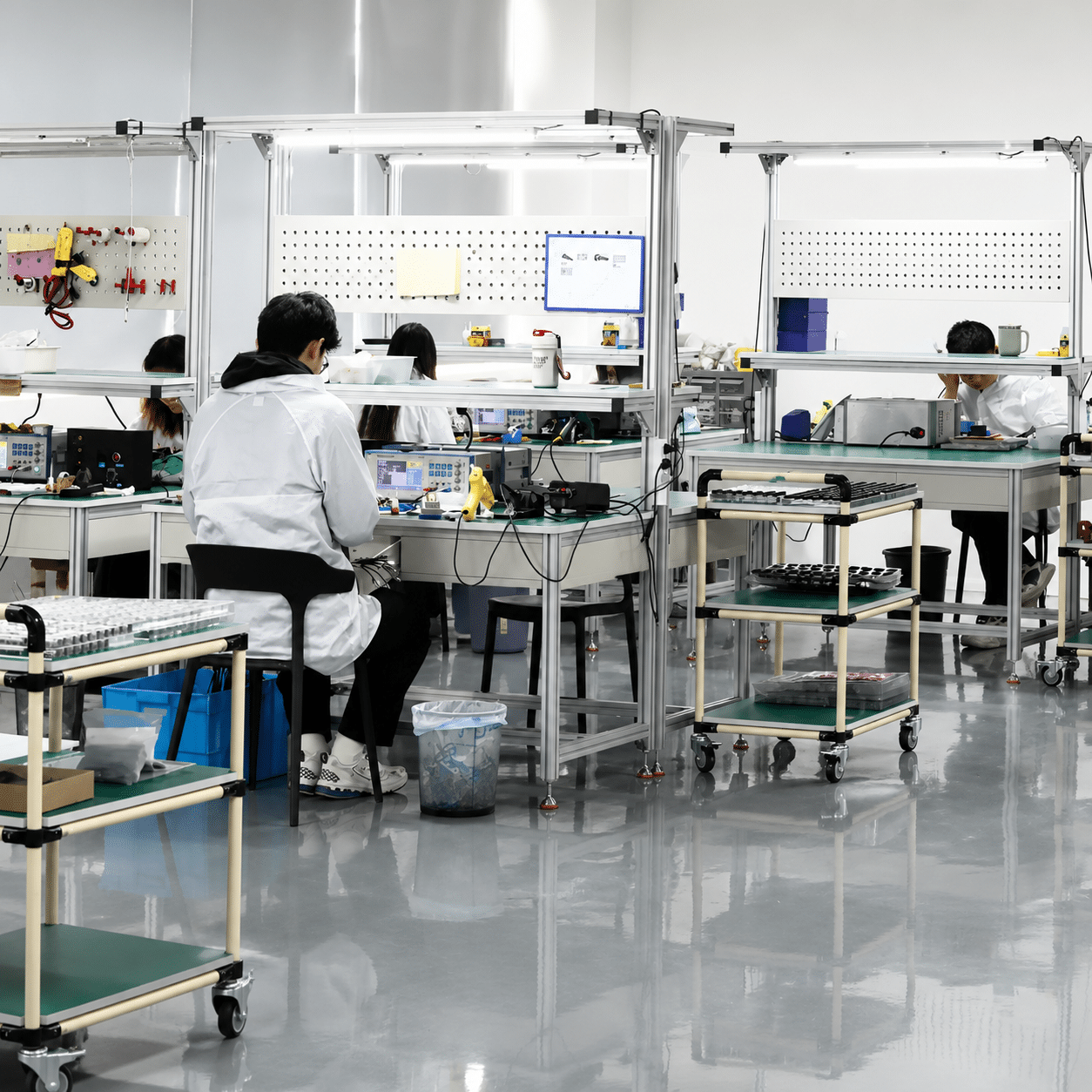
Slot / Groove Photoelectric Sensors for Precise Small Object Detection.
XSZ slot and groove photoelectric sensors use a fixed optical path inside a U-shaped or fork-style housing. They help detect small parts, edges, labels, sheets and moving objects that pass through the slot with repeatable position accuracy.
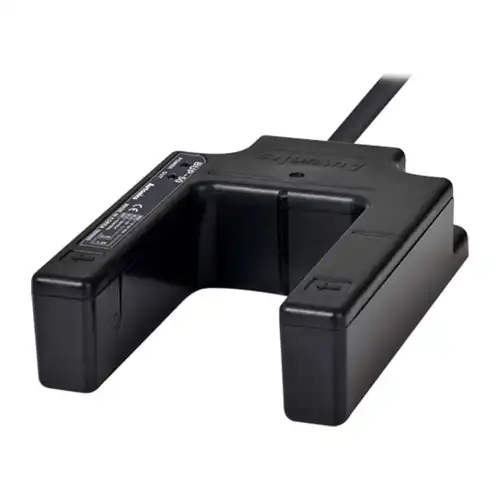
- Built-in transmitter and receiver in one compact slot housing
- Good for small objects, edge checks and fixed-position detection
- NPN / PNP, NO / NC, cable and connector support
Use slot sensors when the detection position must stay fixed and repeatable
Unlike separate through-beam sensors, slot photoelectric sensors have the transmitter and receiver aligned inside one housing. This makes installation easier when the object can pass through a fixed groove.
Fixed optical alignment
The emitter and receiver are built into the same body, reducing alignment work during installation and replacement.
Small object detection
Use for tabs, labels, sheets, pins, parts, edges and objects that pass through a narrow detection slot.
Compact machine fit
Useful for small automation equipment where there is limited space for separate transmitter and receiver mounting.
For parts, sheets, labels and edges passing through a fixed slot
Slot and groove photoelectric sensors are selected when the object path is controlled and the machine needs repeatable detection at a fixed position.
- Small part detection in automated assembly equipment
- Label, film, paper, sheet and edge position checking
- Counting pins, tabs, washers, inserts and passing objects
- Position verification in compact packaging and feeding machines
- Detection where separate through-beam alignment is difficult
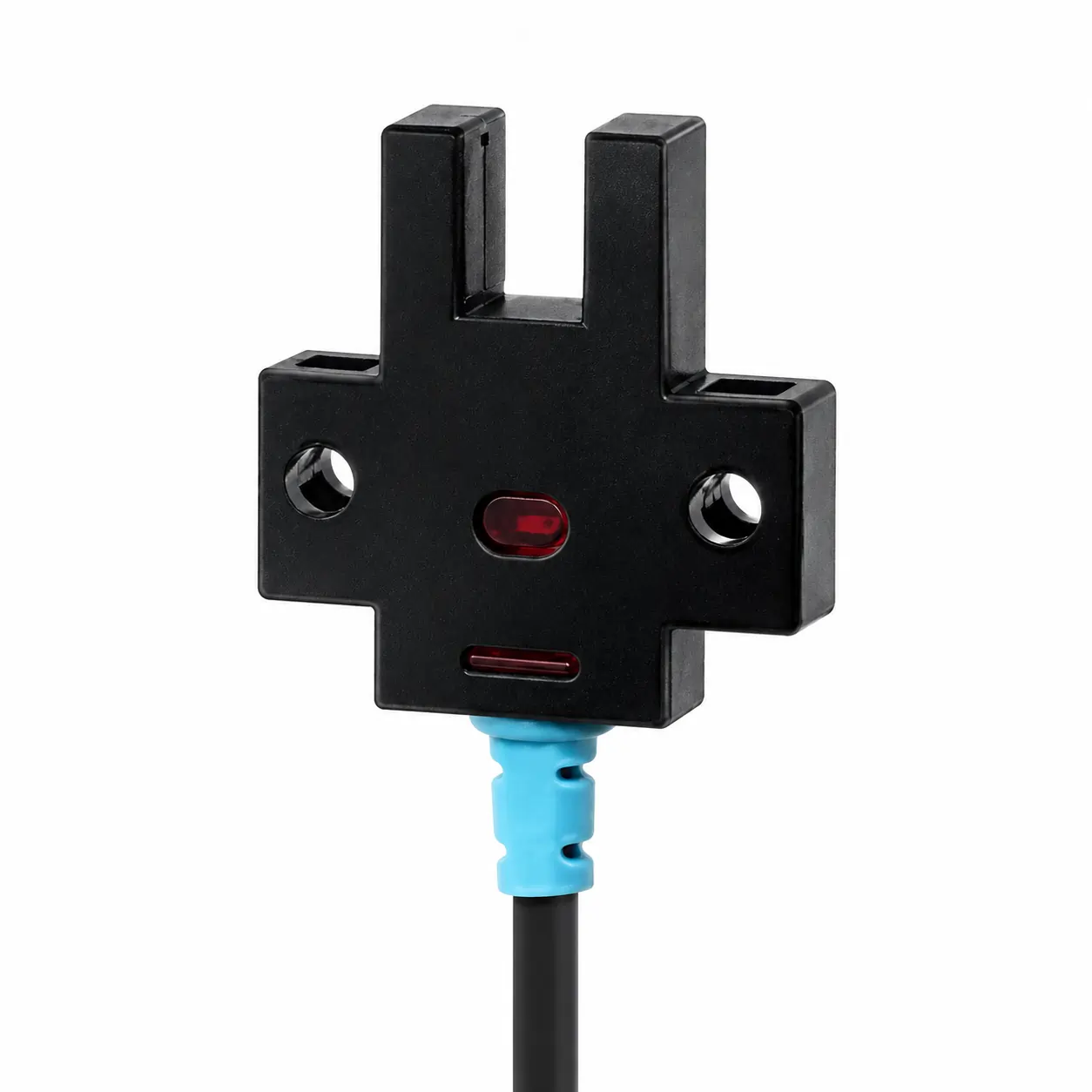
Choose by slot width, object size and passing direction
The right slot sensor depends on whether the object can pass through the groove smoothly while still blocking enough of the optical path for reliable detection.
| Selection Point | Customer Problem | Recommended Check | Information to Provide |
|---|---|---|---|
| Slot width | Object cannot pass smoothly or the gap is too large | Match groove width to object size and clearance | Object size, thickness and required slot width |
| Object size | Small targets may not block enough light | Confirm the smallest detectable part or edge | Minimum object size, shape and passing photo |
| Passing direction | Object orientation changes the blocked area | Check whether the part passes vertically, horizontally or at an angle | Movement direction, guide rail design and machine drawing |
| Speed and signal time | Fast objects can create very short output pulses | Match response time to pass speed and controller scan time | Line speed, object spacing and PLC input timing |
| Mounting space | Sensor body may not fit into the machine structure | Confirm body size, cable exit and bracket position | Installation photo, available space and cable direction |
Slot sensor vs separate through-beam sensor: choose compact precision or flexible distance
Both detect beam interruption. Slot sensors simplify alignment in a fixed groove, while separate through-beam sensors are better when the detection distance or opening is wider.
Slot / Groove Sensor
- Emitter and receiver are built into one compact housing
- Best for fixed object paths and small parts passing through a slot
- Easy replacement because the optical alignment is built in
- Limited by slot width and physical body size
Through-beam Sensor
- Separate transmitter and receiver are mounted on two sides
- Better for longer detection distance or wider machine openings
- Can be used when the object cannot pass through a fixed slot
- Requires more alignment work and two-sided mounting
Prevent missed pulses from wrong slot width, object orientation or pass speed
Most slot sensor problems come from choosing only by housing size. The real object path, object thickness, speed and controller timing must also match the sensor.
Slot is much wider than the object
If the object blocks only a small part of the beam, the signal may be unstable or too short for the controller.
Confirm object path and signal time
Share the object size, guide position, speed and PLC scan time so XSZ can recommend a practical model.
More repeatable detection
Correct selection helps reduce missed counts, false signals, unstable output and repeated machine adjustment.
Slot sensor options for OEM machines and replacement projects
XSZ supports model matching by slot width, housing style, output logic, cable requirement and machine environment. Available options depend on the selected sensor series.
Slot width and housing
Select the groove width, body size and mounting direction based on target size and available machine space.
Output and wiring
Confirm NPN or PNP, normally open or normally closed, voltage, cable length and connector requirement before sample production.
Response and signal
Choose response time and output type according to part speed, object spacing and controller input timing.
Stable slot detection depends on object blocking, guidance and timing
Send real application details before ordering. A slot sensor can perform differently on thin film, small metal tabs, paper edges, moving pins or parts with unstable orientation.
| What to Confirm | Why It Matters | What to Send XSZ |
|---|---|---|
| Object size and thickness | The target must block enough of the fixed optical path | Minimum size, thickness, shape and target photo |
| Slot width | Too narrow causes friction; too wide reduces detection margin | Required groove width and clearance |
| Guiding accuracy | Unstable object position can miss the beam | Guide rail design, passing path and movement tolerance |
| Pass speed | Fast objects create short output pulses | Speed, spacing, pulse width requirement and PLC scan time |
| Mounting space | Body size and cable direction must fit the machine | Installation photo, available space and cable exit direction |
| Controller input | Output logic must match the PLC or controller | NPN/PNP, NO/NC, voltage, cable or connector requirement |
Send object, slot and speed details for faster model matching
XSZ can help compare slot width, target size, pass direction, movement speed, mounting space and wiring requirement before sample ordering.
Share target
Object size, thickness, material, shape and the smallest target to detect.
Confirm slot
Required groove width, passing direction, guide structure and machine photo.
Match output
Voltage, NPN/PNP, NO/NC, cable length, connector and OEM requirements.
Manufacturer support for slot and groove sensor projects
For distributors, machine builders and automation integrators, XSZ supports slot sensor selection, OEM presentation and stable repeat orders for compact fixed-position detection tasks.
Compare nearby optical sensing options before ordering
If the object cannot pass through a slot or the machine opening is wider, another photoelectric sensing mode may be better for the detection task.