Inductive Proximity Sensors for Stable Metal Detection.
XSZ manufactures inductive proximity sensors for detecting metal parts, machine positions, fixtures, conveyors and automation equipment. Choose by sensing distance, housing size, shielded or unshielded mounting, output type and working environment.
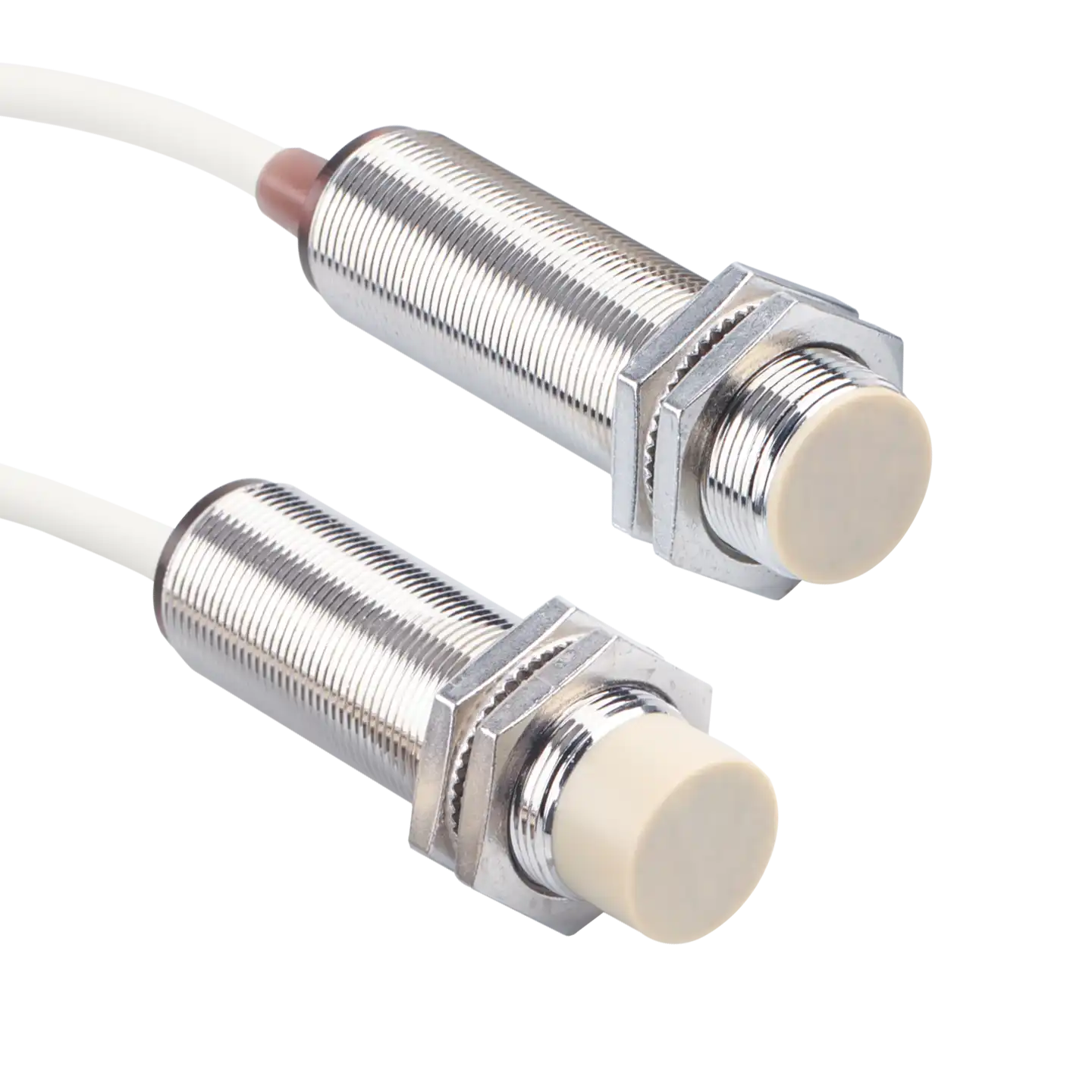
- M5 / M8 / M12 / M18 / M30 threaded housings
- NPN / PNP, NO / NC, DC and AC options
- Flush, non-flush, long-distance and OEM versions
Detect metal parts without mechanical contact or wear
Inductive proximity sensors are built for metal target detection in factory automation. They provide a repeatable electrical signal without touching the workpiece, lever, bracket or moving machine part.
Stable Metal Detection
Detect steel, iron, aluminum, copper and other metal objects for position, presence and counting applications.
No Contact, Less Wear
Replace mechanical limit switches where contact wear, bounce, dust or machine vibration can reduce long-term reliability.
Factory Environment Ready
Select suitable housing, sealing, cable, connector and circuit protection for oil, coolant, dust, vibration and electrical noise.
Use inductive sensors where your machine needs a reliable metal signal
Inductive proximity sensors are widely used in machine tools, conveyors, robotics, packaging machinery, assembly stations and material handling equipment.
- Machine position confirmation for cylinders, slides, fixtures and end stops
- Metal part presence detection on conveyors, feeders and assembly stations
- Counting screws, pins, brackets, stamped parts and machined components
- Tooling, jig and workpiece detection in CNC and automated equipment
- Limit position replacement where mechanical switches wear too quickly
- OEM equipment supply with matched cable, connector, wiring and label
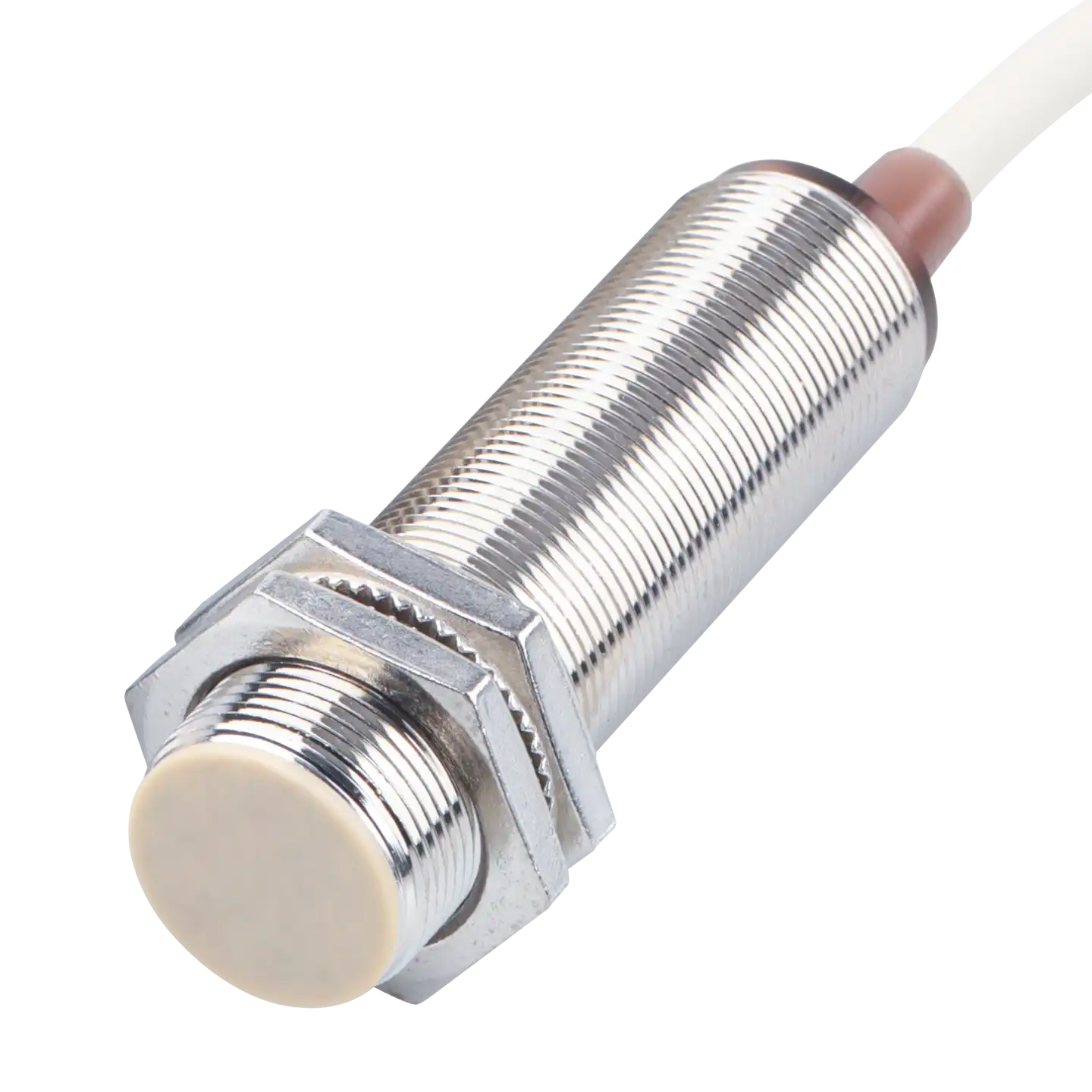
Match housing size, sensing distance and output to your equipment
Start with the available mounting space and target size, then confirm shielded mounting, sensing distance, voltage, output type and connection method.
| Housing Size | Typical Use | Selection Focus | Buyer Note |
|---|---|---|---|
| M5 / M8 | Compact mechanisms and small parts | Small bracket space and short sensing distance | Confirm target size and mounting tolerance carefully |
| M12 | General automation and fixtures | Balanced size, cost and installation flexibility | Common choice for standard machine position detection |
| M18 | Conveyors, cylinders and larger targets | More sensing distance and stronger installation margin | Useful when vibration or target variation is expected |
| M30 | Large metal targets and heavy equipment | Longer sensing range and larger threaded housing | Confirm bracket strength and available installation depth |
| Long-distance | Difficult mounting positions | Extended range for wider mechanical tolerance | Target material and target size strongly affect actual distance |
Choose the mounting style before confirming the final model
Mounting style changes both installation flexibility and sensing distance. A correct choice helps avoid unstable signals caused by nearby metal brackets or machine frames.
Flush Inductive Sensor
- Can be embedded into a metal bracket
- Better protection against mechanical impact
- Usually has shorter sensing distance than non-flush types
- Good for compact machines and standard position detection
Non-flush Inductive Sensor
- Requires clearance from surrounding metal
- Usually provides longer sensing distance
- Useful when the target cannot come very close
- Installation space must be checked before ordering
Confirm these points to prevent missed signals and false triggering
Many inductive sensor problems come from target size, nearby metal, insufficient sensing margin or mismatched wiring. Confirming these points early helps reduce sample changes and production delays.
Is the target large enough?
Catalog sensing distance is usually tested with a standard metal target. Smaller targets may require a shorter working distance or larger sensor size.
Is there surrounding metal?
Nearby brackets, frames or machine plates can affect detection. Flush and non-flush models need different installation clearance.
Does the output match your PLC?
Confirm voltage, NPN/PNP, NO/NC, two-wire or three-wire connection, cable length and connector type before wiring the machine.
Build the inductive sensor around your machine design
XSZ supports common industrial configurations for machine builders, automation integrators, maintenance teams and distributors.
Housing and Mounting
Choose M5, M8, M12, M18, M30, short body, standard body, flush or non-flush mounting.
- Threaded cylindrical housing
- Shielded or unshielded design
- Bracket and installation depth support
Output and Wiring
Match the sensor to your PLC input, controller, relay or machine wiring standard.
- NPN or PNP output
- NO, NC or NO+NC logic
- DC three-wire, DC two-wire or AC options
Cable and Branding
Customize details for OEM equipment, replacement projects or distributor product lines.
- Cable length and connector type
- Private label and wiring diagram
- Packaging and batch supply support
Actual sensing distance depends on more than the catalog number
For stable machine use, leave enough margin between rated sensing distance and the real working distance. This reduces missed detection caused by material, movement or installation variation.
Target size and material
Large steel targets are easier to detect. Smaller parts, aluminum, copper or irregular shapes may require a shorter working distance or a larger sensor.
Mounting and surrounding metal
Flush and non-flush sensors need different clearance. Nearby brackets, machine frames and metal plates can affect the sensing field.
Movement and tolerance
Vibration, side approach, loose brackets and changing target positions reduce reliable detection. Reserve margin for real production movement.
| What to Confirm | Why It Matters | What to Send XSZ |
|---|---|---|
| Target material | Different metals have different detection performance | Steel, iron, aluminum, copper, brass or stainless steel |
| Target size | Small targets reduce practical sensing distance | Length, width, thickness or part drawing |
| Working distance | Rated distance should not be used as the exact working limit | Actual gap between sensor face and target |
| Mounting space | Flush and non-flush models need different metal clearance | Bracket photo, installation drawing or available thread size |
Send your metal detection requirements and get a suitable model suggestion
Tell us the target material, target size, sensing distance, mounting style, voltage, output logic and environment. XSZ engineers can help narrow down the right inductive proximity sensor for your machine.
Share Target
Send metal material, target size, shape and required sensing distance.
Confirm Mounting
Tell us flush or non-flush mounting, bracket space and surrounding metal conditions.
Get Model
Receive suitable series, wiring option, sample suggestion and OEM configuration details.

XSZ supports standard supply and OEM inductive sensor projects
Work with a sensor manufacturer for model selection, sample confirmation, private label, cable and connector customization, batch supply, export packing and distributor cooperation.
Compare other XSZ sensor options for your automation project
If your target is not only metal, or your installation needs a different detection method, these related product pages can help you choose the right sensor family.