Ring Proximity Sensors for Small Metal Part Detection.
XSZ ring proximity sensors detect small metal parts passing through a sensing aperture. They are used for screw counting, spring detection, rivet feeding, pin verification and automated assembly machines where standard cylindrical sensors may miss fast-moving parts.
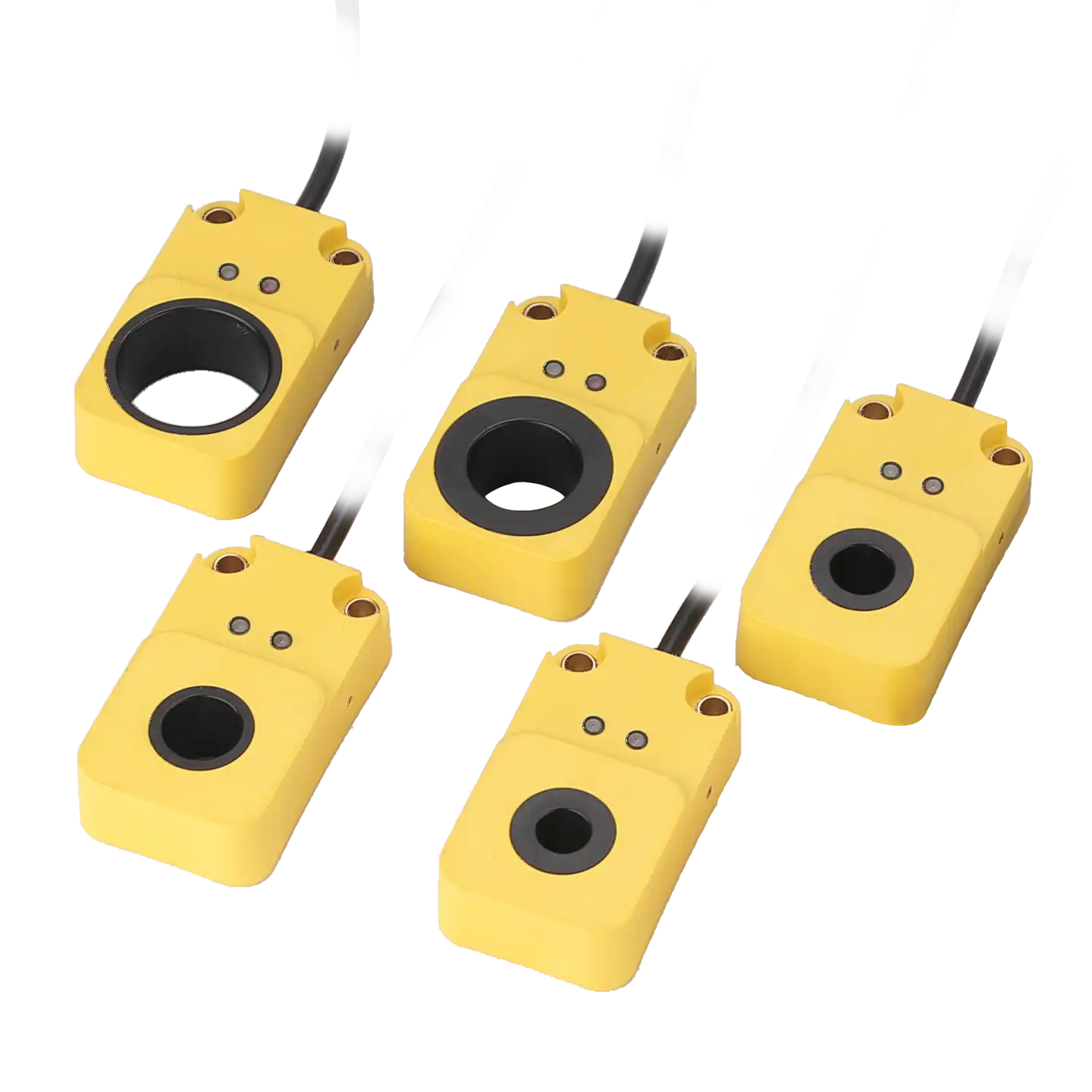
- Detect screws, springs, rivets, pins and metal inserts
- Choose aperture size by part and feeding tube diameter
- NPN / PNP, NO / NC and OEM cable options
Detect small metal parts as they pass through the aperture
Ring proximity sensors create a sensing field inside the ring opening. When a metal part passes through the aperture, the sensor outputs a signal for counting, confirmation or process control.
Through-hole Detection
Detect small metal parts passing through a tube, rail or feeding path instead of relying on side detection.
Stable Counting
Generate signals for screws, rivets, springs, pins and stamped parts in feeding and assembly systems.
Machine Integration
Match the sensor to feeder speed, tube diameter, controller input, cable routing and installation space.
Use ring sensors where small metal parts pass through a defined path
Ring proximity sensors are practical for automated feeding, counting and verification tasks where the target is small, fast or difficult to detect from the side.
- Screw counting and screw presence confirmation in automatic screw feeders
- Spring, pin, rivet, washer and small metal insert pass detection
- Part counting in vibratory bowl feeders and linear feeding tracks
- Missing-part verification before assembly, pressing or packaging
- Signal confirmation in pneumatic tubes or guided metal part channels
- OEM equipment supply with matched aperture, cable, connector and wiring
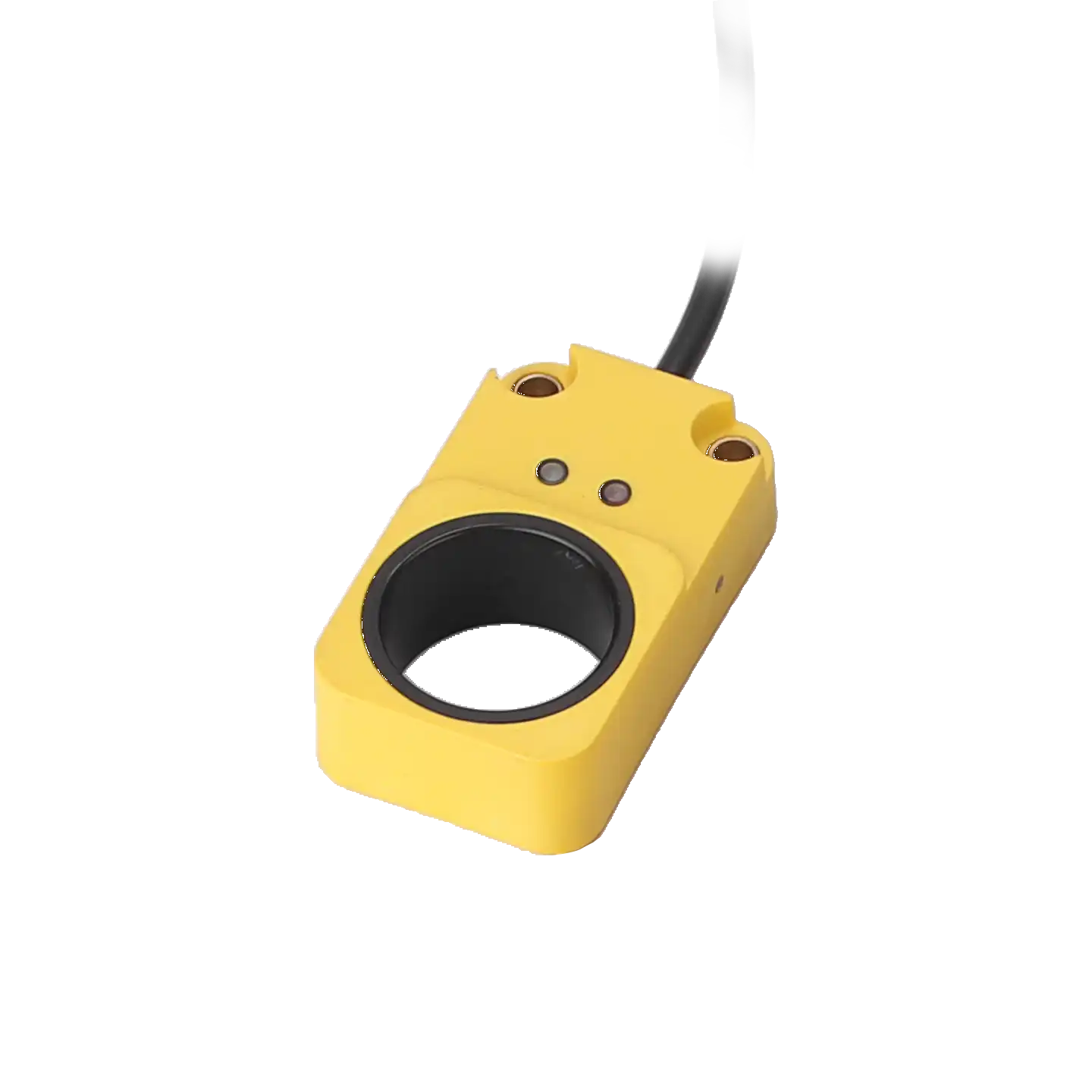
Match the ring aperture to the part size and feeding path
The aperture must be large enough for the part and tube, but not so large that the sensing margin becomes weak. Start with the part dimensions and feeding channel diameter.
| Selection Factor | Why It Matters | What to Confirm | Buyer Note |
|---|---|---|---|
| Part size | Small parts need enough metal volume inside the sensing field | Length, diameter, thickness and material | Send a drawing or photo with scale when possible |
| Aperture diameter | Too large can reduce detection margin, too small can block feeding | Ring inner diameter and tube outer diameter | Leave clearance for smooth passing without wobble |
| Passing speed | Fast parts require stable response and controller timing | Parts per minute and signal duration requirement | PLC scan time and counting logic should be checked |
| Part orientation | Different orientation changes metal area inside the sensing field | Random, guided, vertical drop or horizontal feed | Guided paths usually improve repeatability |
| Installation space | Feeder structure affects mounting and cable routing | Tube, rail, bracket and available sensor space | Share installation photos for faster model selection |
Use a ring sensor when side detection is not stable enough
For very small metal parts, a standard cylindrical sensor may depend too much on part position and passing angle. A ring sensor detects the part as it passes through the sensing aperture.
Standard Proximity Sensor
- Detects from one side of the target path
- Good for larger metal parts and fixed positions
- May miss small or fast parts if alignment changes
- Requires careful bracket and target distance setup
Ring Proximity Sensor
- Detects metal parts passing through the opening
- Better for screws, springs, pins and rivets
- Useful for feeding tubes and guided channels
- Improves counting reliability when the path is controlled
Confirm the feeding path before choosing the final model
Missed counts and double counts usually come from aperture mismatch, unstable part orientation, high speed, wrong output logic or controller timing. Confirming these points early helps reduce machine debugging time.
Is the aperture too large or too small?
The part must pass smoothly while still creating a strong signal. Oversized apertures can reduce detection margin for tiny parts.
Is the part path controlled?
Random bouncing, tilted parts or unstable feeding can change the signal. Guided tubes and consistent orientation improve repeatability.
Can the PLC read each pulse?
High-speed feeding requires suitable response time, output logic, pulse duration and PLC scan time to avoid missed or double counts.
Build the ring sensor around your feeder and counting logic
XSZ supports ring proximity sensor configurations for screw feeders, bowl feeders, insertion equipment, assembly lines and OEM machines.
Aperture and Mounting
Choose ring opening size, body shape and mounting method based on the feeding tube or part channel.
- Inner diameter matched to part path
- Bracket and tube installation support
- Cable direction and space review
Output and Response
Match the sensor signal to your PLC, counter, feeder controller or machine input.
- NPN or PNP output
- NO, NC or custom logic
- Pulse timing and response check
Cable and Branding
Customize details for OEM equipment, feeder suppliers or distributor product lines.
- Cable length and connector type
- Private label and wiring diagram
- Packaging and batch supply support
Stable part counting depends on aperture, speed and controller timing
Ring sensor selection should start from the real part and feeding path. Share part dimensions, tube size, speed and PLC input so XSZ can recommend a model with enough counting margin.
Part and aperture match
Small metal parts need enough sensing margin inside the ring opening. The aperture should match the part path, not just the largest part dimension.
Feeding speed and pulse
Fast passing parts create short pulses. Confirm response time, PLC scan time and whether the controller needs pulse stretching or filtering.
Tube and installation space
Feeding tube diameter, bracket design, cable direction and vibration can affect installation stability and counting reliability.
| What to Confirm | Why It Matters | What to Send XSZ |
|---|---|---|
| Part details | Part material and size determine sensing margin | Material, length, diameter, thickness, drawing or photo |
| Feeding path | Tube and guide design determine aperture selection | Tube inner/outer diameter, channel photo and mounting space |
| Speed | Fast parts require reliable response and PLC timing | Parts per minute, pulse requirement and controller scan time |
| Output logic | Counting system must receive the correct signal type | NPN/PNP, NO/NC, voltage and cable or connector requirement |
Send your part and feeder details for ring sensor selection
Tell us the part material, dimensions, feeding tube size, passing speed, output type and installation space. XSZ engineers can help narrow down the right ring proximity sensor for your machine.
Share Part
Send metal material, part size, shape, drawing and expected orientation.
Confirm Feeder
Provide tube diameter, feeding speed, mounting photo and controller input.
Get Model
Receive aperture suggestion, output option, sample plan and OEM configuration details.

XSZ supports ring sensor selection, sampling and OEM supply
Work with a sensor manufacturer for application review, aperture selection, sample confirmation, private label, cable and connector customization, batch supply and feeder manufacturer cooperation.
Compare other XSZ sensor options for your automation project
If the target does not pass through a guided aperture, these related product pages can help you choose another detection method.