Proximity sensors work by converting the presence or motion of a nearby object into an electrical signal without any physical contact, detecting a change in an electromagnetic field, capacitance, or reflected light to trip a switch. To understand how do proximity sensors work, consider the four main types: inductive sensors detect metal at 1–60mm[1], capacitive sensors sense plastic, liquid, and wood, and photoelectric sensors reach up to 60 meters using light beams. With no moving parts, they don’t wear out.
This guide answers the questions people really ask when they start looking into these devices. What are the main sensor types out there, meaning inductive, capacitive, photoelectric, and ultrasonic? What parts are sitting inside one of them? How far can each type actually “see” an object? And which specifications genuinely matter when you go to pick one for your machine?
Quick Takeaways
- Proximity sensors detect objects contact-free, eliminating moving parts that wear out over time.
- Inductive sensors detect only metal at short ranges of 1–60mm.
- Capacitive sensors sense plastic, liquid, and wood—not just metallic targets.
- Photoelectric sensors reach up to 60 meters using light beams.
- Match sensing distance, output type (NPN/PNP), and IP rating to your application.
What Is a Proximity Sensor and What Does It Actually Detect?
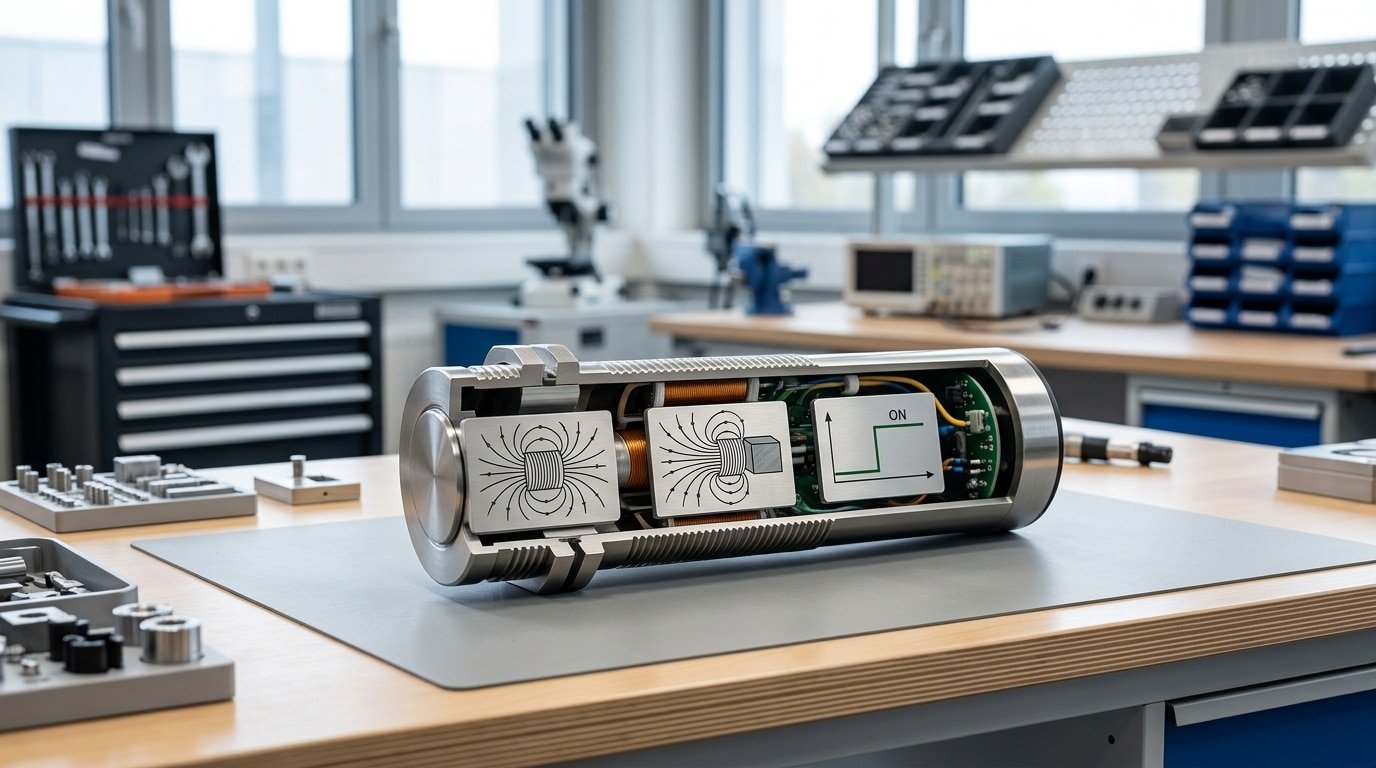
A proximity sensor is basically a device that spots a nearby object without ever touching it. It takes the presence or the motion of that object and turns it into an electrical signal, and then it switches its output ON the moment the target moves into range. Because there is no physical contact happening, there is no wear either, and that is exactly why factories tend to prefer them over mechanical limit switches, which eventually fail as their contacts wear away.
Here is the part that most guides seem to skip over. There really isn’t one single thing called a “proximity sensor.” Each type responds to a different physical property, and picking the wrong one is the number-one reason a sensor never triggers the way you expected. Understanding how do proximity sensors work actually begins with matching the sensor to whatever your target genuinely is.
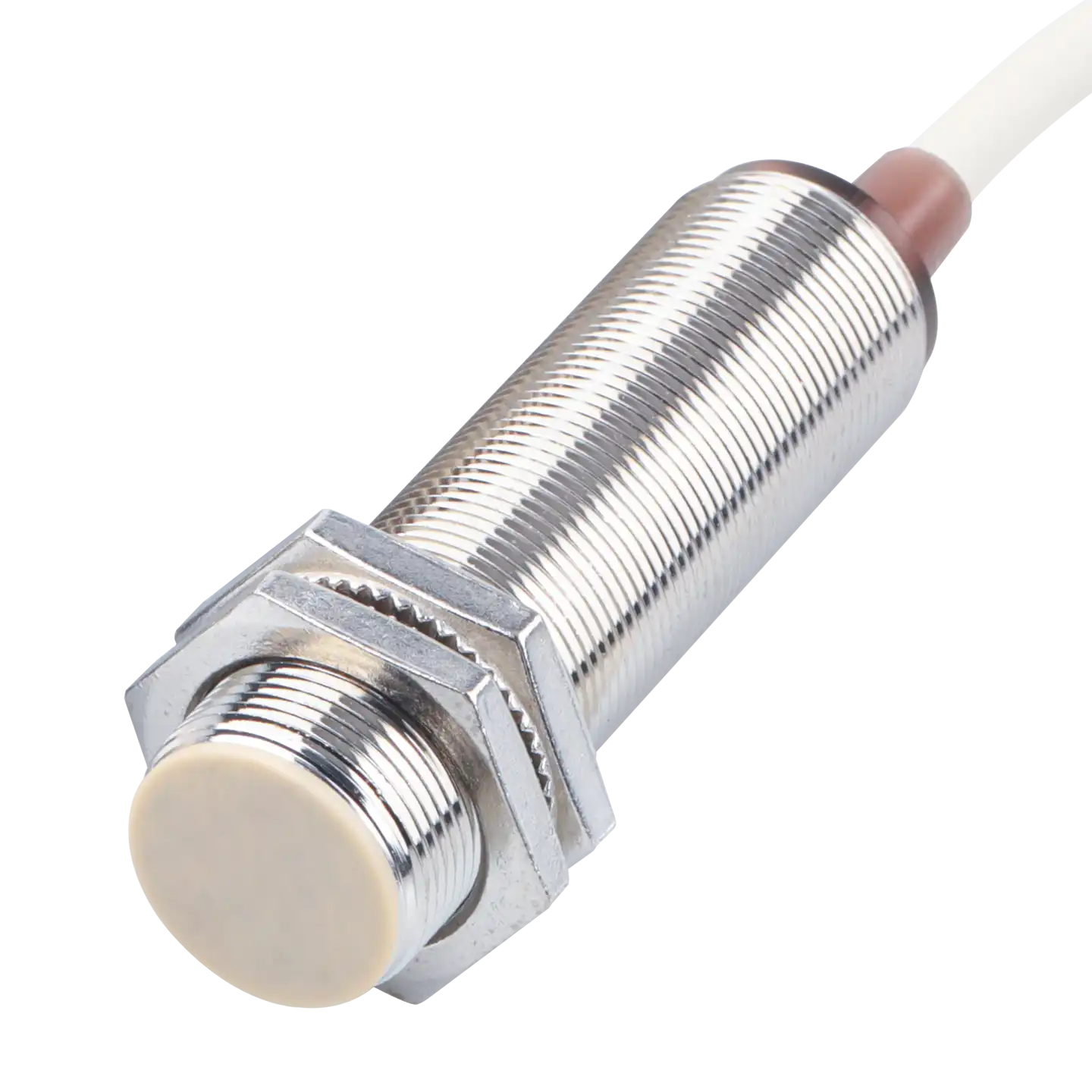
- Inductive: responds to metal only, using eddy currents, which are tiny circulating currents that get induced in the metal surface.
- Capacitive: responds to a dielectric change, meaning any material that shifts stored electrical charge, and that includes water, grain, or plastic.
- Ultrasonic: responds to sound bouncing back, so it works on nearly any solid or liquid surface out there.
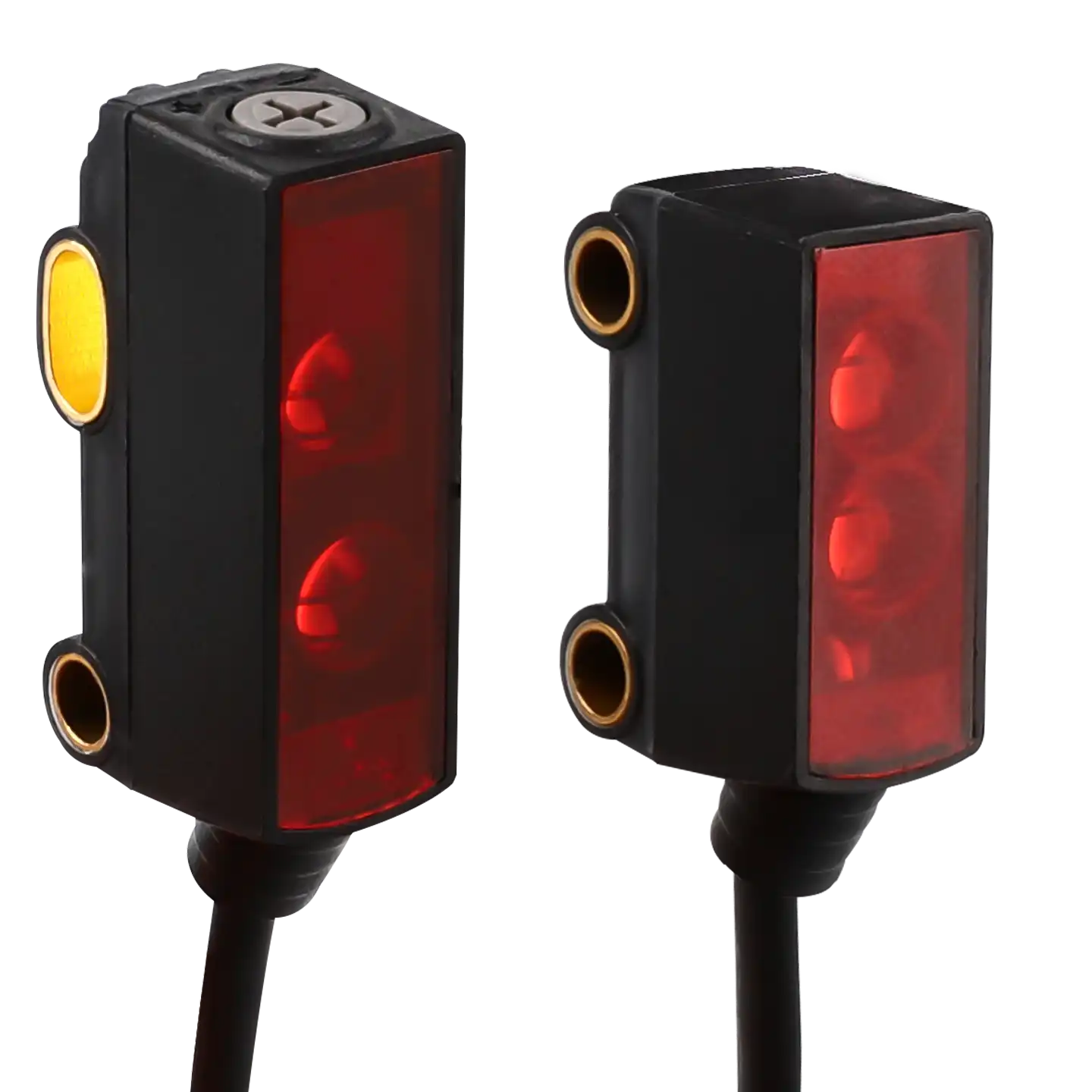
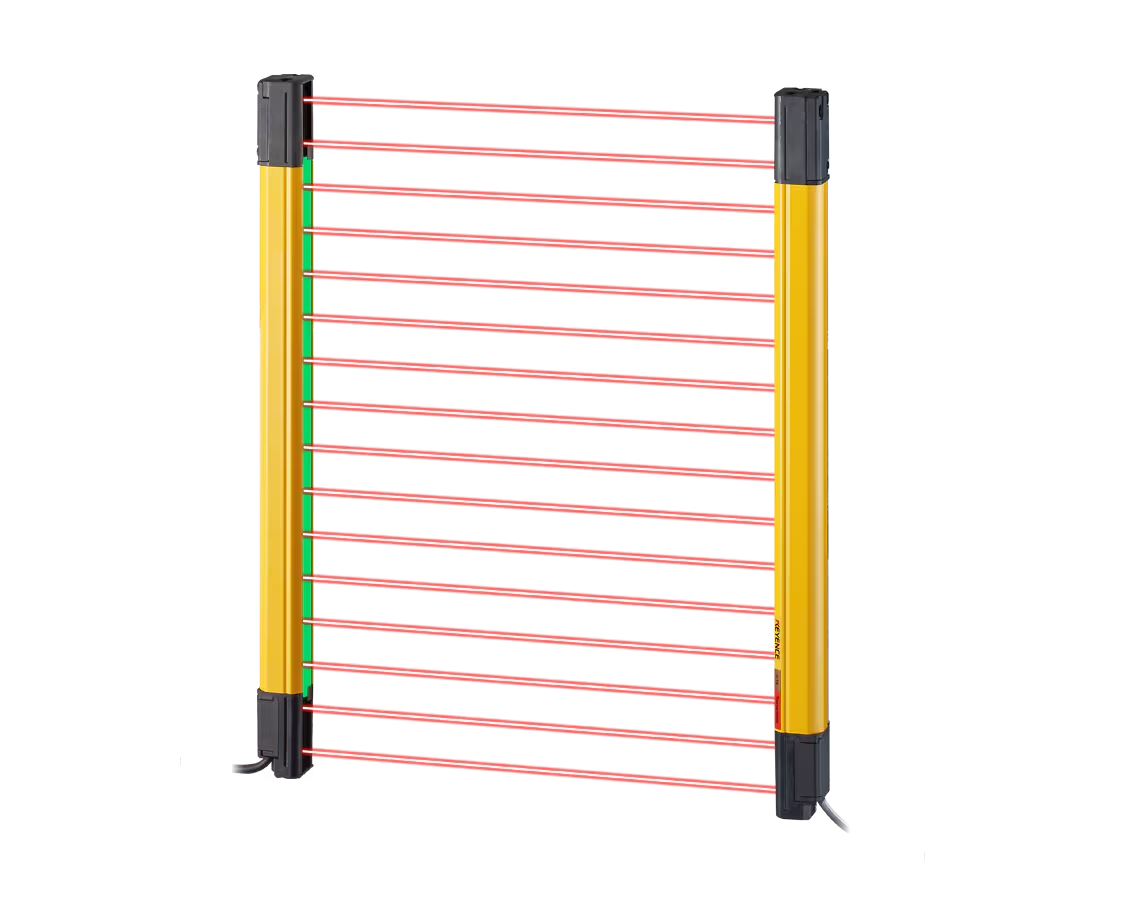
- Photoelectric: responds to a light beam getting blocked or bounced back toward it.
- Magnetic: responds to a magnetic field, so it can detect magnets right through walls or through non-magnetic barriers.
The property really drives everything here. An inductive unit will simply ignore a plastic bottle, because non-metal targets create no eddy-current response at all, while a capacitive unit picks up that very same bottle with no trouble. So the real question is never only “which sensor is best.” It is more like “which physical property does my object actually present.” Once you get that match right, the switching, the range, and the wiring choices all fall into place.

How Does a Proximity Sensor Work Step by Step?
Every proximity sensor follows the same three-stage cycle: emit a field, detect a change, then switch an output. The sensor converts an object’s presence into an electrical signal without touching it. This is exactly how proximity sensors work across every type, from a phone screen to a factory conveyor.
What happens in each of the three stages?
The stages run in a loop, thousands of times per second on fast industrial models:
- Emit or generate a field: The sensor head projects an active zone — an electromagnetic field, a light beam, or an electrostatic field. This zone is the “sensing range,” often 1–15 mm[2] for inductive types.
- Detect a change: When a target enters the zone, it disturbs the field. A metal part, for example, absorbs energy and shrinks the field’s amplitude. The sensor’s internal circuit measures this shift.
- Switch the output: Once the change crosses a set threshold, the sensor flips its output ON. A controller reads that signal as “object present.”
Why doesn’t the sensor need to touch anything?
The field does the reaching for it. The object never contacts the sensor face; it only alters a field that already fills the surrounding space. That’s why contactless sensors last far longer than mechanical switches, no moving parts wear down. A practical tip: always mount the sensor so the target crosses the field’s center, not its edge, where readings get shaky and false triggers rise.
How Do Inductive Sensors Detect Only Metal and Ignore Plastic?
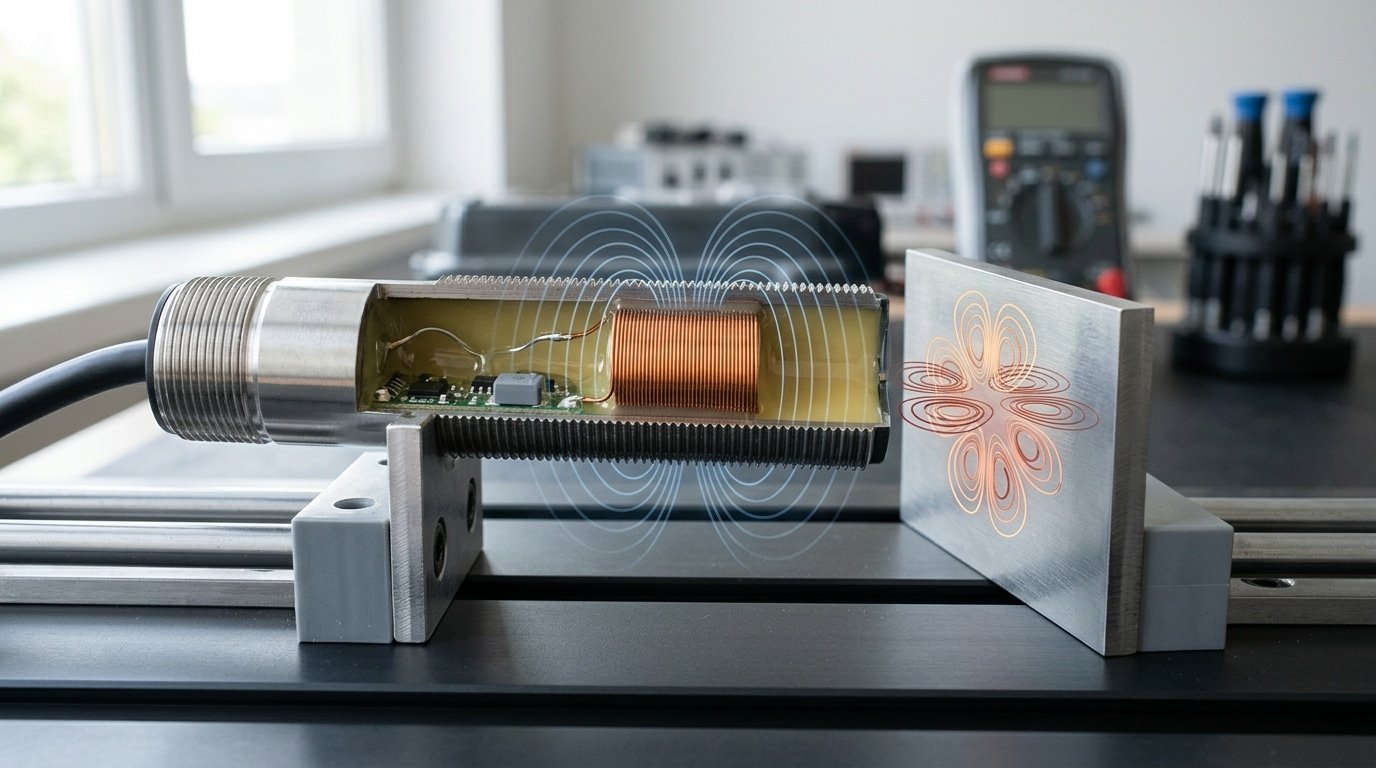
Inductive sensors only pick up metal because they depend on eddy currents, which are tiny circular electric currents that form inside conductive metal when that metal enters a magnetic field. Plastic, wood, and skin don’t carry electricity well, so no eddy currents form and the sensor stays quiet the whole time. According to Omron’s sensor technology guide, this eddy-current reaction is exactly what limits inductive types to metallic targets and nothing else.
Here is the actual mechanism when you ask how do proximity sensors work in this category. A coil sitting inside the sensor head creates an oscillating magnetic field, meaning a field that flips its direction thousands of times every second. When a piece of metal moves close, that field forces eddy currents to swirl around inside the metal surface. Those currents pull energy away from the coil, which weakens the oscillation. The sensor circuit notices that drop in strength and switches its output to ON.
Plastic ignores the field completely because it cannot host any eddy currents, so the oscillation never weakens at all. The same holds true for cardboard, glass, and a human hand, since none of them conduct enough electricity to steal energy from the coil.
The typical sensing distances tend to run 1,15 mm for the common cylindrical models. The range you get depends on how big the coil is and what kind of target metal you are working with:
- M8 barrel sensor: roughly 1–2 mm of rated distance
- M18 barrel sensor: around 5–8 mm
- M30 barrel sensor: about 10–15 mm[3]
One useful tip from the field is that these ratings assume you are detecting mild steel. Trying to detect aluminum, copper, or brass cuts the distance by 40,approximately 60% because those metals form weaker eddy currents. You should always apply a “correction factor” from the datasheet before you mount anything, otherwise your part will slip right past without being detected.
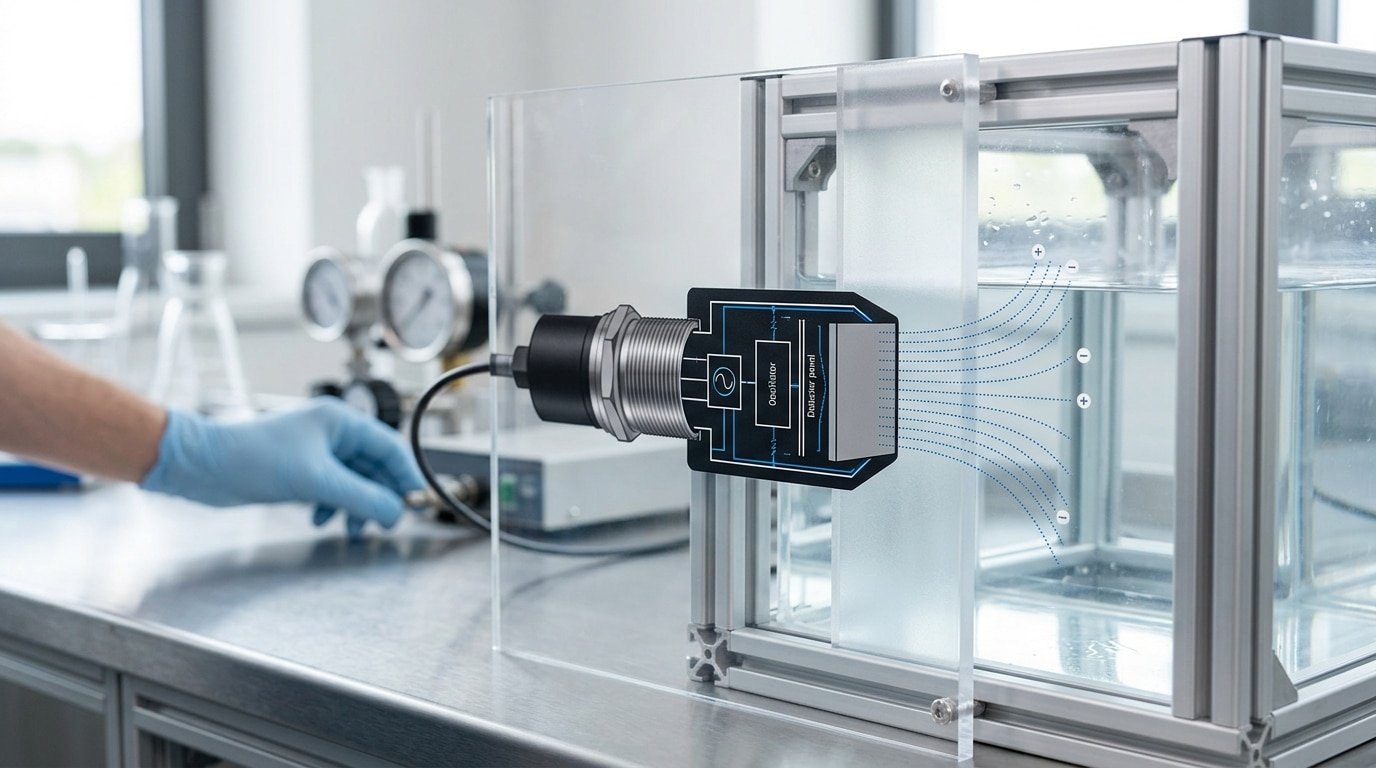
Capacitive proximity sensors can detect liquids, powders, and solids by measuring changes in electrical capacitance as a target moves near the sensing face, according to Omron’s sensor technology data. Any material with a dielectric constant higher than air will shift the sensor’s internal circuit and flip its output. This means a single sensor can spot water, grain, or plastic pellets, and no metal is required for it to work.
Here is the physics explained in plain words. The sensing face essentially acts like one plate of a capacitor. Air, which serves as the second “plate,” has a dielectric constant near 1. Water, by comparison, sits around 80. When water fills the gap, the capacitance jumps sharply and the sensor triggers. That huge difference is exactly why capacitive units are so good at detecting liquid levels, even through a glass or plastic tank wall that is up to a few millimeters thick.
That same sensitivity to water is also the biggest weakness, though. Humidity and condensation carry the same high-dielectric water molecules, so even a thin film of moisture on the sensing face reads almost like a real target, and this causes false triggers.
- Sensing range: typically up to 25 mm, which is shorter than photoelectric types but generally enough for monitoring a tank through its wall.
- Detectable dielectric: materials above roughly 1.2 (grain, powder, oil, water) will register reliably.
- Sensitivity trimmer: reduce the gain so that condensation stays below the switch threshold in humid rooms.
Here is a practical fix commonly used in food and grain plants. You mount the sensor with the face angled downward so droplets fall off, and you add a small dead-zone delay of 100 to 200 ms[4] to ignore brief moisture spikes. This keeps a flour silo level sensor from tripping every time the morning air cools down.
How Do Ultrasonic, Photoelectric and Magnetic Sensors Compare for Range and Material?
Ultrasonic, photoelectric, and magnetic sensors split the work by physics. Ultrasonic bounces sound off almost any surface across 20 cm to several meters. Photoelectric fires a light beam and reaches the farthest,some models detect at 60 m. Magnetic senses a permanent magnet straight through plastic or aluminum walls. Pick by material and distance, not habit.
⚠️ Common mistake: Using an inductive sensor to detect plastic, liquid, or wood. This happens because inductive sensors only respond to metal targets within 1–60mm, so non-metallic objects never trip the switch. The fix: switch to a capacitive sensor, which detects plastic, liquid, and wood, then verify your target material against the sensor type before wiring anything.
Why does ultrasonic work on materials light and metal fields miss?
Ultrasonic sensors send a high-frequency sound pulse and measure the echo return time. Sound reflects off clear glass, black rubber, liquid, and grain alike,surfaces that trip up light and metal sensors. The catch: soft foam or angled targets scatter the echo, cutting reliability. Keep the target face roughly square to the sensor.
Why does photoelectric reach the longest range?
Light travels far with little loss, so a through-beam photoelectric pair (separate emitter and receiver) detects objects across conveyor gaps up to 60 m. Answering how do proximity sensors work at distance, the beam simply breaks when an object crosses it,no field to weaken. Dust and steam are the enemy; they scatter the beam and cause false trips.
| Type | Principle | Best material | Typical range |
|---|---|---|---|
| Inductive | Eddy currents | Metal only | 1–60 mm |
| Capacitive | Capacitance shift | Liquid, powder, solid | 3–40 mm[5] |
| Ultrasonic | Sound echo | Almost any surface | 20 cm–6 m |
| Photoelectric | Light beam | Opaque objects | Up to 60 m |
| Magnetic | Magnet detection | Magnets through walls | 10–70 mm |
Magnetic sensors ignore walls entirely, making them the go-to for cylinder position feedback where a piston magnet moves inside sealed metal tubing.
What Do Sensing Range, Hysteresis and Response Time Mean in Plain Terms?
These three specs decide whether a proximity sensor works reliably in the real world. Sensing range is how far it detects an object, hysteresis is the on/off gap that stops rapid flickering, and response time is how fast it reacts,often under 2 milliseconds. Understanding how proximity sensors work means reading these numbers, not just trusting the label.
Why Is Nominal Range Never the Range You Actually Get?
Nominal sensing distance (Sn) is a lab reference measured against a standard steel target. Your effective range is always lower. Sensor makers apply safety margins, so the guaranteed working distance (Sa) is usually about 72% of the nominal value under worst-case temperature and voltage. A sensor rated 8mm may reliably switch at only 5.8mm.
Target material shrinks it further. Stainless steel or aluminum reduces range by a reduction factor of 0.3 to 0.7 versus mild steel. Always design for the effective distance, never the headline number.
What Does Hysteresis Do for On/Off Stability?
Hysteresis is the small gap between the switch-on point and the switch-off point. Without it, a vibrating object sitting right at the edge would trigger the output on and off dozens of times per second,called chatter. Typical hysteresis runs 10,approximately 20% of the sensing range, so a sensor turning on at 6mm[7] stays on until the object retreats past 6.9mm.
How Fast Is Response Time in Practice?
Response time tells you the delay between detection and output switching. Inductive models often reach 0.5,2ms, letting them count fast-moving parts on a production line. According to Omron’s sensor technology overview, this switching frequency directly limits how many objects per second you can reliably count.
How Do Proximity Sensors Work Inside Phones, Faucets and Parking Sensors?
Phones, faucets, and parking sensors each use a different detection principle: capacitive or infrared sensing dims your screen on a call, infrared reflection opens a faucet, and ultrasonic echo measures parking distance. All three convert an object’s presence into an electrical signal without touching it. That signal tells the device what to do.
Why does a phone screen turn off during a call?
Your face triggers a proximity sensor near the earpiece. Many phones use an infrared emitter and a light receiver: when your cheek reflects the invisible beam back, the phone knows an object sits within about 5cm and blacks out the touchscreen. This blocks accidental taps and saves battery. Some models pair this with capacitive sensing, reading the change in electrical field as skin approaches.
How does an automatic faucet know your hands are there?
Touchless faucets rely on infrared reflection,the same photoelectric principle covered earlier. A small emitter sends out an infrared beam. When your hands enter the zone, they bounce the light back to a receiver, switching the water valve ON. Pull your hands away and the beam stops returning, so the water stops.
How do parking sensors measure distance to a wall?
Car parking sensors use ultrasonic echo. The sensor fires a high-frequency sound pulse, then times how long the echo takes to return. Because sound travels roughly 343 metres per second in air, a 2-metre gap returns an echo in about 12 milliseconds. Shorter times mean beeps get faster, warning you before contact.
Which Proximity Sensor Should You Choose for Your Material and Distance?
Match the sensor to your target’s material and range. Metal at short range (under 60mm[8]) calls for inductive. Liquids, powders, or plastic through a container wall need capacitive. Anything past 100mm or unknown surfaces means ultrasonic or photoelectric. Pick wrong and the sensor simply never triggers.
Here is the fast decision path once you know how do proximity sensors work at the physics level:
- Metal, close (2–60mm): inductive. It reads eddy currents in the metal target and ignores everything else.
- Liquid, powder, or grain through a plastic wall: capacitive. It senses the shift in electrical capacitance, so it detects through a 4mm tank wall.
- Distance over 100mm, or shiny/clear/soft targets: ultrasonic (sound-based, ignores color) or photoelectric (light beam, ranges past several meters).
The most expensive mistake? Aiming an inductive sensor at plastic, glass, or cardboard. Non-metal targets produce no eddy-current response, so the sensor stays dead,no fault code, just silence. Engineers waste hours “debugging” wiring when the physics never allowed detection.
Second trap: forgetting the correction factor. Inductive rated range assumes mild steel, so aiming at aluminum or brass drops the effective range sharply,by approximately 60% or more, the same shortfall covered in the inductive section. Always check the target-material factor in the datasheet before committing to a mounting distance.
Frequently Asked Questions About How Proximity Sensors Work
Short answers to the questions people ask most after learning how proximity sensors work. Understanding these four points,human detection, false triggers, glass penetration, and output wiring,prevents the most common installation mistakes and saves hours of troubleshooting.
Can a proximity sensor detect a human?
Yes, but only certain types. A capacitive sensor detects a hand or body because changes in electrical capacitance register from the water inside you. An inductive sensor ignores you completely,your body isn’t metal, so no eddy currents form. Photoelectric and ultrasonic sensors also detect people, since they react to any object that blocks a beam or reflects sound.
Why does my sensor false trigger?
Most false triggers come from three sources: electrical noise from nearby motors, condensation on a capacitive face, or mounting two inductive sensors too close (their fields interfere). The fix for interference is spacing sensors at least two body diameters apart. For capacitive units, wipe the face and lower the sensitivity potentiometer a few percent.
Do proximity sensors work through glass?
Capacitive sensors do,glass is a dielectric, so the sensor “sees” liquid behind a 3mm bottle wall. Inductive sensors won’t penetrate glass to find metal reliably. Photoelectric beams reflect off glass surfaces, which causes ghost readings.
What’s the difference between NPN and PNP outputs?
NPN switches the negative (ground) line; PNP switches the positive (+24V[10]) line. Match the sensor output to your PLC input type,mismatching means the load never activates.
Key Takeaways for Understanding and Choosing Proximity Sensors
The single rule behind how do proximity sensors work: each type matches a detection principle to what an object physically is. Every sensor converts an object’s presence into an electrical signal without touching it. Pick the wrong principle for your material, and the sensor stays blind no matter how close the target sits.
Five types cover almost every job. Here is what each one reads best:
- Inductive: metal only, via eddy currents in the target; typical range 1–15mm.
- Capacitive: liquids, powders, wood, plastic; senses changes in electrical capacitance up to 30mm.
- Ultrasonic: any solid or liquid surface using sound echo; range spans centimeters to several meters.
- Photoelectric: most opaque objects using a light beam that gets blocked or bounced back.
- Magnetic: magnets and cylinder pistons through steel walls.
Before you buy, check two things: the target’s material and the working distance. A plastic bottle needs capacitive or photoelectric, never inductive. Metal at 3mm points straight to inductive. Get material and distance right first, and the switching, hysteresis, and response-time specs all fall into place.
Do this every time. It turns sensor selection from guesswork into a quick, repeatable check.
Reference Sources
- [1]uk.rs-online.com/web/content/discovery/ideas-and-advice/proximity-sensors-guide — supports: Proximity sensors detect nearby objects **without physical contact** by converting the p…
- [2]omron.com/global/en/technology/sensor/proximity/ — supports: Proximity sensors detect nearby objects **without physical contact** by converting the p…
- [3]ifm.com/gb/en/gb/landing-page-uk/proximity-sensors-explained-types-applicatio… — supports: A common operating method is to **emit a field or beam** and then detect changes in that…
- [4]balluff.com/en-us/blog/the-basic-operating-principle-of-an-inductive-proximit… — supports: Inductive proximity sensors use **electromagnetic induction** and detect metallic object…
- [5]omch.com/how-do-proximity-sensors-work/ — supports: A proximity sensor typically switches its output **ON** when an object enters its detect…
- [6] — supports: Sonar real-time citation (HEAD-verified)
- [7]ia.omron.com/support/guide/41/introduction.html — supports: Sonar real-time citation (HEAD-verified)
- [8]en.wikipedia.org/wiki/Proximity_sensor — supports: Sonar real-time citation (HEAD-verified)
- [9] — supports: Sonar real-time citation (HEAD-verified)
- [10]linkedin.com/pulse/how-proximity-sensors-work-one-simple-flow-2025-neuravio-8… — supports: Sonar real-time citation (HEAD-verified)